
While you may not be able to grow a complete prairie on your deck, it is possible to grow prairie plants in a very small space.
This is an excerpt from the Wild Ones Journal
Current members can log in to read the latest issue or check out the Journal Archives.
By Elizabeth Plonka
I began a very exciting experiment in 2002. It all started when I moved from the suburbs to the city of Chicago. I was happy to leave behind the work of my suburban yard, but I thought having some container gardens on my new deck would be manageable. I volunteer in natural-areas restoration, and I wanted to have some of my favorite prairie plants with me in the city.
The deck has full sun with south and west exposures. I started with nine pots of various sizes up to a 2-foot diameter, and two window boxes. Most of the containers are plastic to reduce weight, and the potting medium is a mix of garden soil and compost. I do have to water the plants every two or three days in the summer depending on conditions. The pots are out in the winter without any extra protection. The majority of the plants I’ve tried are doing well, and survive as perennials so far. My collection has grown to over 55 species in 21 pots. I purchase 3-inch plugs; I do not use rescued plants.
The five plants that have not survived so far simply did not come back after their first winter, leading me to believe that they may not have been hardy in a container situation. Since I usually have only one individual of each species, when one dies, it is hard to tell if the species is not suitable to the conditions, or if that individual was weak. As time goes on, however, I expect that competition in the pots will cause some mortality. In that case I may plant a new individual of the missing species in a new pot rather than trying to divide the plant or plants that crowded the species out. If the whole pot begins to decline, only then would I dig out, divide, and repot, but so far this has not happened.
I began the project with plants from the dolomite prairie ecosystem since I thought they might have the best chance of survival in containers. Dolomite prairies sometimes have very little soil above the bedrock, but there are species that adapt to those conditions. As the experiment continued, many of the plants thrived, and I began to use more experimental species. Now I like to try something new every year. Last year I added a gazebo, and I am training native vines, riverbank grape (Vitis riparia), bittersweet (Celastrus scandens), and Virginia creeper (Parthenocissus quinquefolia) over the top. Next year I am planning to fertilize. I may try a top dressing of compost and the ash from the burned dead winter stems in some pots, and fish emulsion on others. Also, I will be adding some wet pots, with their drainage holes 3 inches up the side of the containers, so I can try some wetland species.
Some of the species change their behavior as a container plant. For instance, wild bergamot (Monarda fistulosa) and downy sunflower (Helianthus mollis) both started out strong, but by the third year they had stopped blooming and spread throughout the pot. This may have happened because of competition from the other species in the pots. Obviously, I am most pleased with the species that survive the winter, but there are some species that are so charming that I am willing to plant them every year as annuals. Prairie petunia (Ruellia humilis) and bird’s foot violet (Viola pedata) are two species that do not consistently make it through the winter, but they are very charming in a window box and I usually replace them.
A few species are doing well, but just might not be old enough to prove themselves by blooming. Leadplant (Amorpha canescens), Canada milk vetch (Astragalus canadensis), and New Jersey tea (Ceanothus americanus) have all survived the winter, but they have yet to bloom. I have a few plants that are normally very large but in the confined container space they have become dwarfed. Jerusalem artichoke (Helianthus tuberosus) and cup plant (Silphium perfoliatum) are both about one-third their normal size.
There are a number of species that have made it through at least one winter and had at least two summers of bloom. I feel these species can make an impressive container prairie garden. The following list is for full sun. I cannot help but feel that there are many woodland and savannah plants that could be grown in containers in shade situations. I will begin experimenting with this myself as soon as I get enough shade from the vines growing on my gazebo.
If you begin your own experiment, do not forget to include some of your favorite plants, even if they are unproven or someone tells you they will not work. Including some of your special species makes the trial and error of the experiment more fun.
Good Performers in My Containers
- Purple giant hyssop (Agastache nepetoides)
- Nodding wild onion (Allium cernuum)
- Kitten tails (Besseya bullii )
- Side-oats grama (Bouteloua curtipendula)
- Virgin’s bower (Clematis virginiana)
- Shooting star (Dodecatheon meadia)
- Prairie smoke (Geum triflorum)
- False sunflower (Heliopsis helianthoides)
- Prairie alum root (Heuchera richardsonii)
- Junegrass (Koeleria cristata)
- Two-flowered Cynthia (Krigia biflora)
- Foxglove beardtongue (Penstemon digitalis)
- White prairie clover (Petalostemum candidum)
- Yellow coneflower (Ratibida pinnata)
- Pasture rose (Rosa carolina)
- Sweet black-eyed Susan (Rudbeckia subtomentosa)
- Little bluestem (Schizachyrium scoparium)
- Blue-eyed grass (Sisyrinchium albidum)
- Stiff goldenrod (Solidago rigida)
- Prairie dropseed (Sporobolus heterolepis)
- Heath aster (Symphyotrichum ericoides)
- Smooth blue aster (Symphyotrichum laevis)
- New England aster (Symphyotrichum novae-angliae)
- Spiderwort (Tradescantia ohiensis)
Click on the plants below for more details.
Grasses for Containers
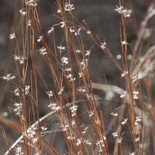
Little Bluestem(Schizachyrium scoparium)
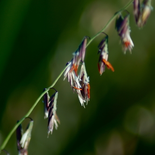
Sideoats Grama(Bouteloua curtipendula)
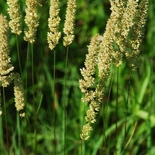
Prairie Junegrass(Koeleria macrantha)
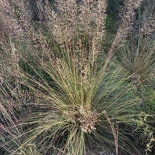
Prairie Dropseed(Sporobolus heterolepis)
Early Spring Blooming Container Plants
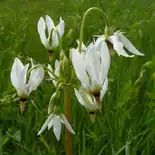
Shooting Star(Dodecatheon meadia)
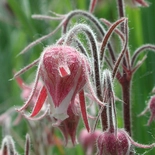
Old Man's Whiskers(Geum triflorum)
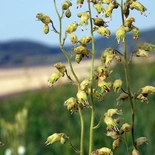
Richardson's Alumroot(Heuchera richardsonii)
Richardson's Alumroot(Heuchera richardsonii)
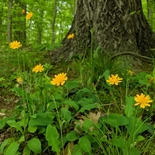
Twoflower Dwarfdandelion(Krigia biflora)
Late Spring to Early Summer Blooms for Containers
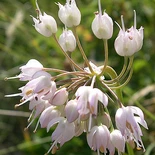
Nodding Onion(Allium cernuum)
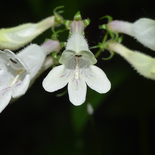
Foxglove Beardtongue(Penstemon digitalis)
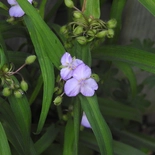
Ohio Spiderwort(Tradescantia ohiensis)
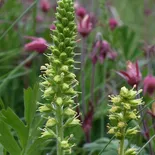
Bull's Coraldrops(Besseya bullii)
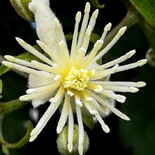
Devil's Darning Needles(Clematis virginiana)
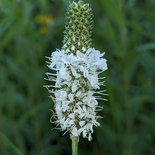
White Prairie Clover(Dalea candida)
Mid-Summer Blooming Perennials for Containers
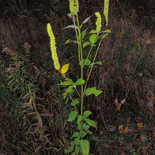
Yellow Giant Hyssop(Agastache nepetoides)
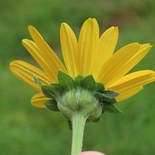
Smooth Oxeye(Heliopsis helianthoides)
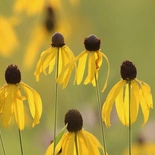
Pinnate Prairie Coneflower(Ratibida pinnata)
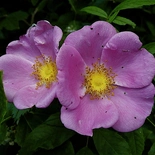
Carolina Rose(Rosa carolina)
Late Summer to Fall Blooming Perennials for Containers
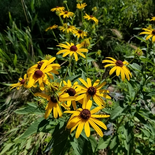
Sweet Coneflower(Rudbeckia subtomentosa)
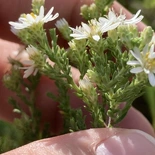
White Heath Aster(Symphyotrichum ericoides)
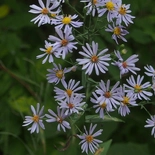
Smooth Blue Aster(Symphyotrichum laeve)
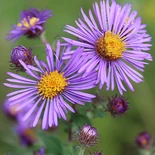
New England Aster(Symphyotrichum novae-angliae)
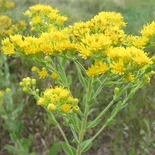
Stiff Goldenrod(Oligoneuron rigidum var. rigidum)
Plonka, Elizabeth. “The Prairie Pots Project.” Wild Ones Journal, July/August 2008, p. 15.