
You may know witch hazel as a beautiful native shrub, one of the last wildflowers of the season. You may know it as Hamamelis virginiana. But I know witch hazel as medicine for a**holes.
This is an excerpt from the Wild Ones Journal
Current members can log in to read the latest issue or check out the Journal Archives.
Now I know Wild Ones started in the Midwest and folks out there are a bit more demure with their language than we are here in New Jersey. So, I want to assure you that I am speaking purely scientifically here. I’m not talking about presidential candidates, or your next-door neighbor with that perfect lawn and not a pollinator in sight…
Plants develop complex chemistry in order to ward off pests and diseases. Unlike us two-legged beings, they can’t run very fast, nor do they have what we would consider an immune system. So they deal with the stresses of life on Earth structurally and chemically. Witch hazel produces chemicals called tannins, particularly hamamelitannin (cleverly named, see what they did there?). Tannins are found in many plants. Oaks are notable in this regard, and tannins are what makes unprocessed acorns unpalatable to humans. Tannins are highly astringent: they bind proteins and are dangerous to consume in quantity. Not only do tannins deter consumption of plant parts by herbivores, they are also antibacterial and antioxidant.
Witch hazel is a tall shrub with a high canopy, each stem seeking sun almost heedless of the others, so that sometimes it sprawls and stems and branches intertwine in pursuit of a small light gap. It is most noted for its flowers, which though spidery and wan, bloom in late October into November when little else blooms. I often see it as an understory shrub in older (not post-agricultural) forests, especially on dry to mesic slopes in association with oaks. It tends to form large colonies but does not readily colonize younger woodlands. Perhaps this is, in part, due to its unusual seed dispersal method: its seed capsules eject their seeds, shooting them up to 30 feet in a radius around the parent plant. A nice way to keep your children close, but not super-effective at long distance dispersal. When I collect witch hazel seeds for our plant nursery, I need to get there before the capsules fully dry out, put them in a sealed brown paper bag, and check back days later after the seeds have shot out of the dry capsules.
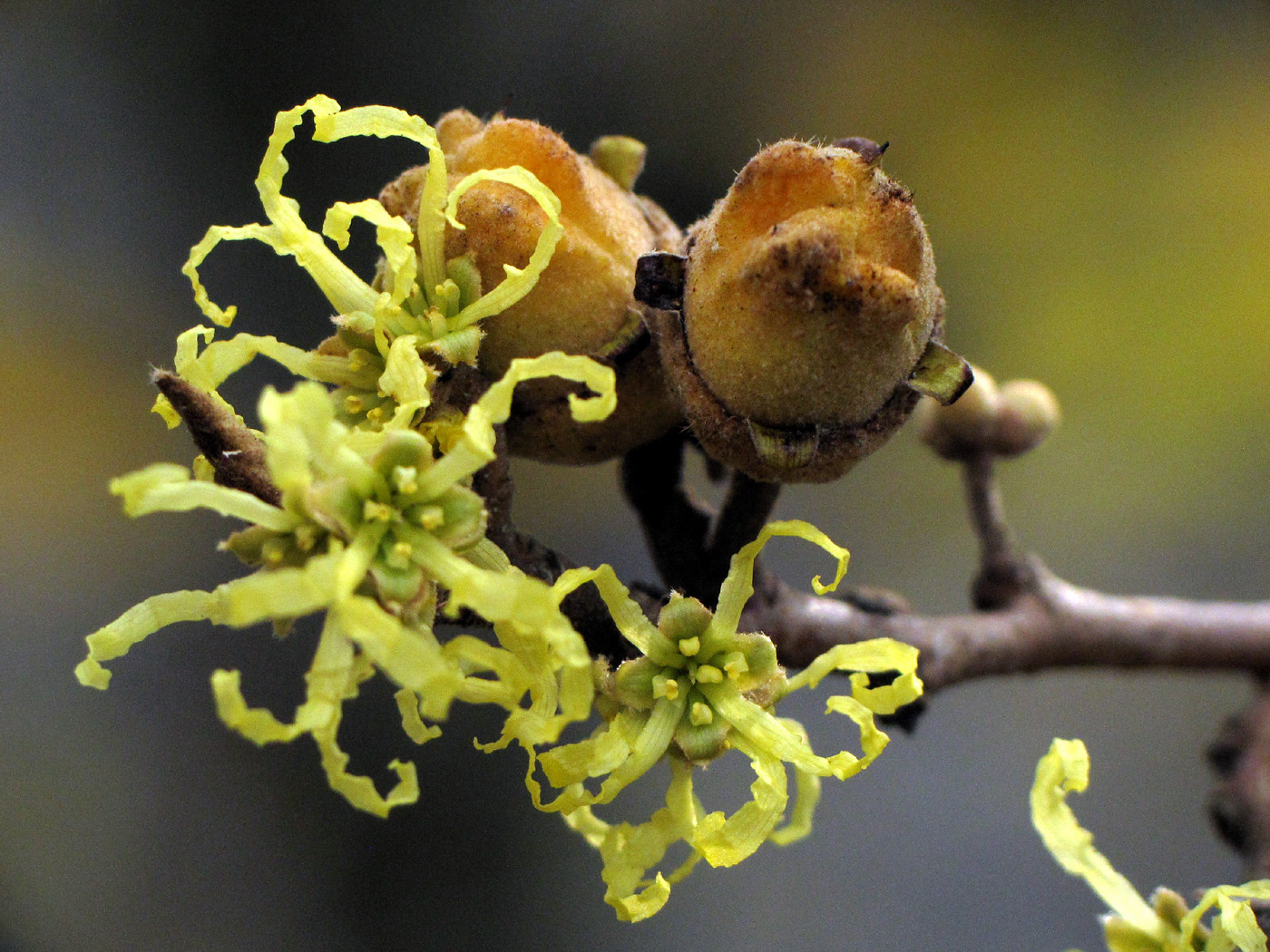
In addition to collecting seeds, I usually forage a few small branches from witch hazel. Witch hazel had some folkloric use in water-witching (dowsing), something I did as a kid on rambles with my dad but am unsure I could pull off now. But I’m not planning on dowsing; I’m foraging the twigs to make a tincture, an extract in alcohol. Witch hazel extracts are noted as topical astringents, and witch hazel is one of relatively few herbal medicines you could find in fluorescent-lit drugstores even in the dark ages before echinacea, bespoke soaps, tea tree everything, and so on.
To make witch hazel extract, I clip the twigs into small finger-length portions, soak them in a mason jar full of vodka for a month, and use the resulting tincture for weepy rashes, like poison ivy. It is particularly amazing—and amazingly good—for fixing a torn-up, itchy butthole after a few days of diarrhea, and hemorrhoids in general.
Medicine for a**holes, like I said.
Using native plants as medicine is one way to be drawn into closer relationship with them. Some people are drawn to plants because of pollinators, or songbirds or beautiful flowers. Others are drawn to native culinary and herbal uses. While foraging can sometimes be purely extractive, at its best it is part of a reciprocal relationship where we harvest plant parts and tend plants (and habitats) in return. I think of foraging as part of a robust approach to ecological restoration, one that draws in many kinds of land stewards with many backgrounds and interests. While ecological restoration may be a young art (and science), Indigenous land management on this continent dates back thousands of years and has always involved the tending of native edible and medicinal plant communities.
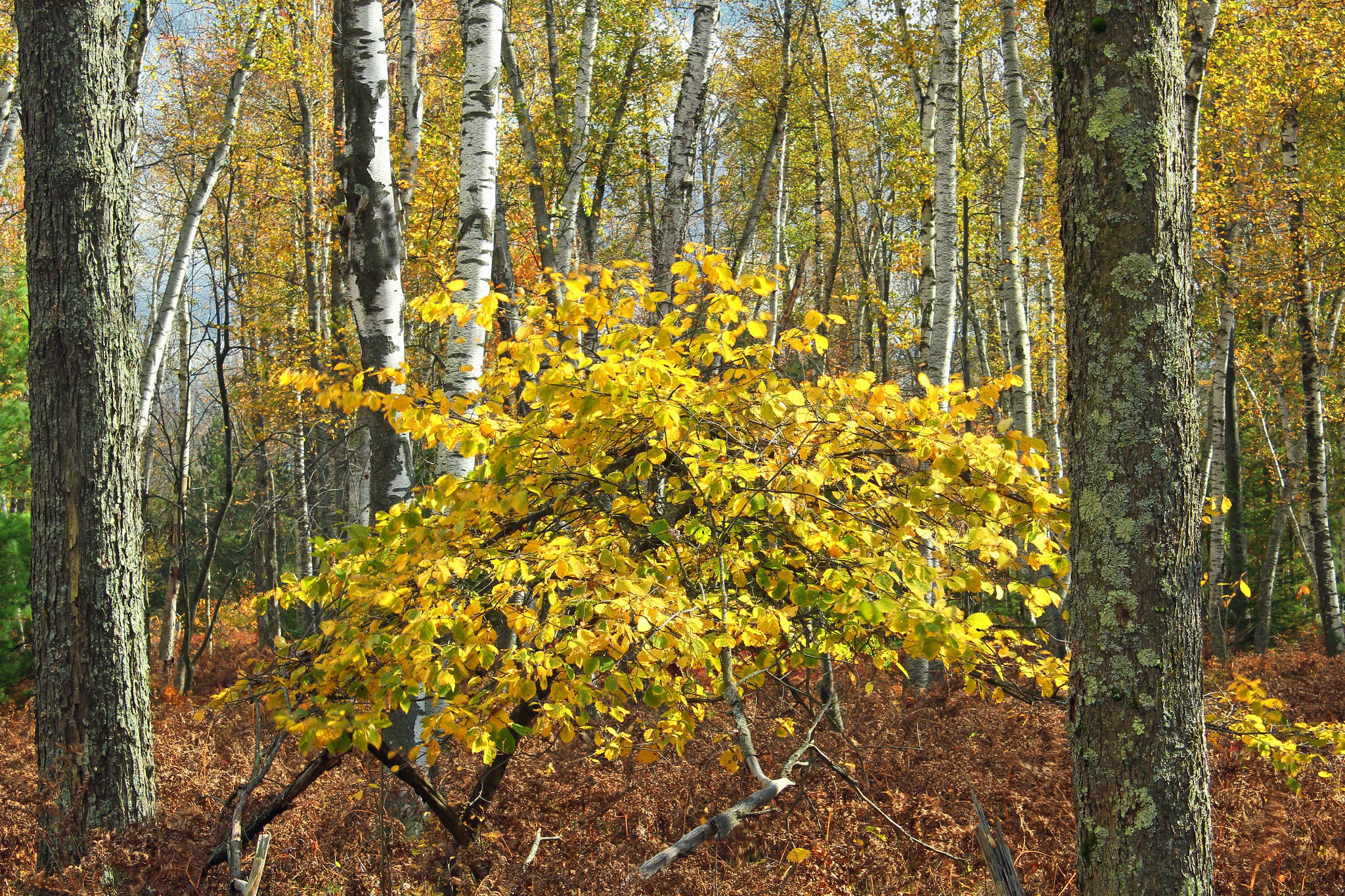
When we tend habitats that contain witch hazel, we are also caretakers for oaks (Quercus spp.), black cohosh (Actaea racemosa), bloodroot (Sanguinaria canadensis), lowbush blueberry (Vaccinium angustifolium), Solomon’s seal (Polygonatum odoratum), serviceberry (Amelanchier spp.) and many other edible and medicinal native plants. Consuming plants for food and medicine is a deeply ancestral act, one that predates Homo sapiens. When we consume wild plants, many of us will feel a responsibility to give back, to be caretakers, to be good members of the wild plant community. We can give back by being stewards of wild habitats and by introducing native medicinal and edible species into our gardens, supporting plants, humans, and other wildlife together.
Maybe witch hazel medicine isn’t only for a**holes, after all.
Rosenbaum., J. (2025). Witch hazel: A medicine for A**holes. Wild Ones Journal, 38(1), 15-16.