
“Fire, good!” That’s what the caveman said in a television advertisement for a local home fireplace installation company many years ago, but I’m sure humans had that same thought a couple millennia earlier. I love to sit by a nice warm fire on a cold winter night. I also have a passion for natives, so I decided to combine these two things in my coursework to obtain my native plant certification through my local Wild Ones chapter. I wanted to learn more about the important role fire plays on native plant, animal and pollinator communities. The various Wild Ones Native Plant Certification courses that I completed through the Root River (Wisconsin) chapter opened my mind and helped me appreciate the connection we have with nature and everything in it.
This is an excerpt from the Wild Ones Journal
Current members can log in to read the latest issue or check out the Journal Archives.
My capstone project, a controlled prairie burn, was one that I think captivates everyone, both young and old. Fire, whether natural or man-made, is a force to be respected. We enjoy it when we camp in the great outdoors, but if we’re not careful it can decimate thousands of acres of land in a hot minute! Statistics from the National Interagency Fire Center bear that out: In 2024, wildfires in the United States consumed 8,924,884 acres of land. This was across 64,897 wildfires, which also destroyed 4,552 structures, including 2,046 homes.
While this is devastating data, some positive things can result from fire. Take for example, the wildfires in the Pacific Northwest. Many plant species depend on fire for survival. When noxious weeds are taken out by fire, native plants can take that opportunity to thrive. New generations of species rise from the ashes. Ash contains valuable nutrients to promote new growth. Trees, like giant sequoias (Sequoiadendron giganteum), need fire to reproduce. Save the Redwoods League explains: “Giant sequoia cones are serotinous, which means that fire on the forest floor causes them to dry out, open and release their seeds. This adaptation ensures that the tree times the release of most of its seeds to coincide with fire, which creates ideal conditions for regeneration success. Fire burns off woody debris and exposes the soil. It also creates an ash layer that returns nutrients to the soil and increases sunlight by killing some of the competing pines and firs.”
But what about in other parts of the country, such as the Great Lakes region? While the Great Lakes region doesn’t have giant sequoias or redwoods, they do have many restored prairies, savannas and other valuable forests. Some of these areas can be thousands of acres of quality habitat for all animals great and small, while others are just as valuable but on a much smaller scale.
For example, Wild Ones member Diane Battisti owns 22 acres of land in rural western Racine County, Wisconsin. Her restored prairie is home to deer, fox, coyote, turkey, rabbits and a healthy population of ticks. For more than 20 years she has been adding various native plants to her prairie, even creating numerous native pocket gardens throughout her property. As I worked to complete my native plant certification coursework over the past two years, I started wondering how we could reduce the number of invasive plant species on her property such as buckthorn (Rhamnus spp.) and garlic mustard (Alliaria petiolata), and reduce the numbers of those nasty bloodsucking ticks. A prescribed burn could be the answer.
Prescribed burns, or controlled fires, have many benefits for the land and people. Benefits include fire prevention, habitat creation, nutrient recycling, invasive species control, reduced pest insects and diseases, increased wildlife opportunities and improved and protected habitats for threatened and endangered species. Repeated prescribed burns can even increase biodiversity of plant species and reduce tick populations. In my opinion, that last benefit was a win all by itself!
Prescribed burn rules vary
Be aware that rules and licensing for prescribed burns vary from state to state. It is crucial to understand and comply with the specific laws and regulations of the state and local jurisdictions where a prescribed burn is being planned.
Consulting with local forestry or fire management agencies, or certified burn professionals, is highly recommended to ensure compliance and safe prescribed burn practice. See https://perc.org/2023/01/10/burn-back-better/ for more information.
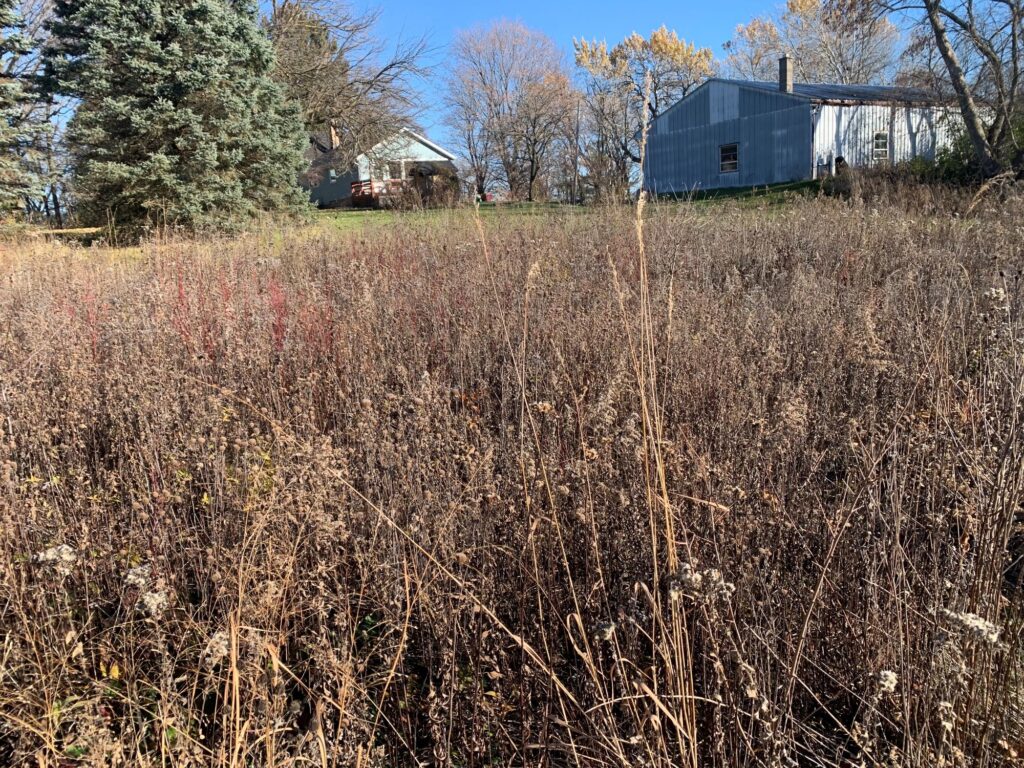
A portion of prairie waiting for the controlled burn.

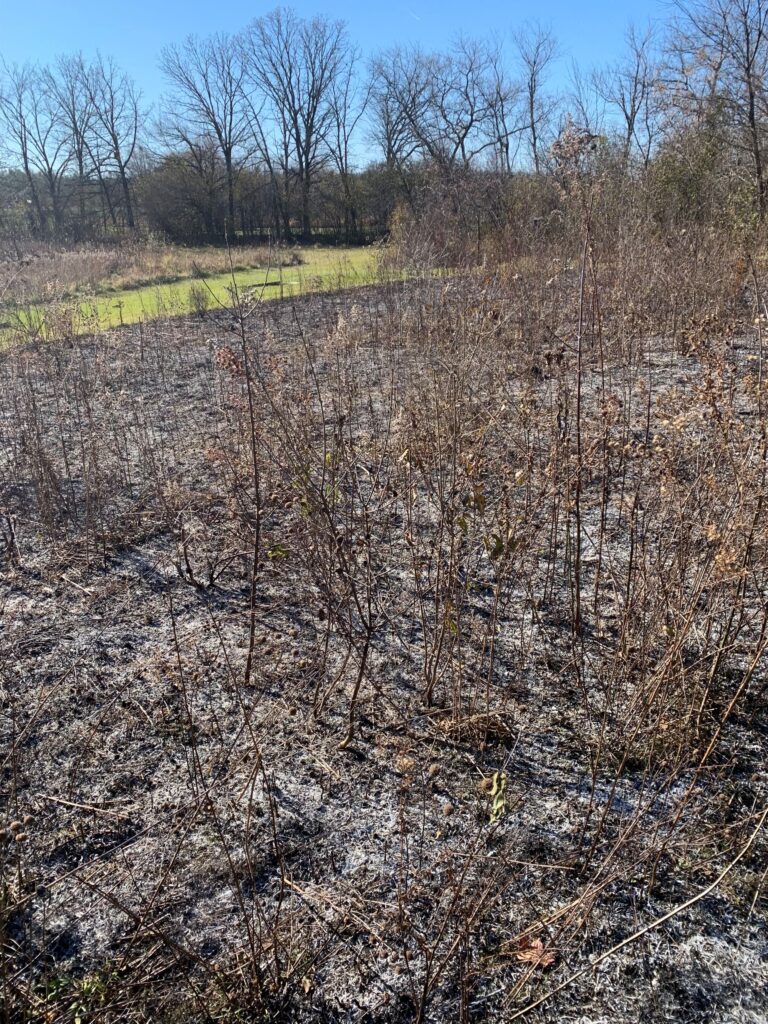
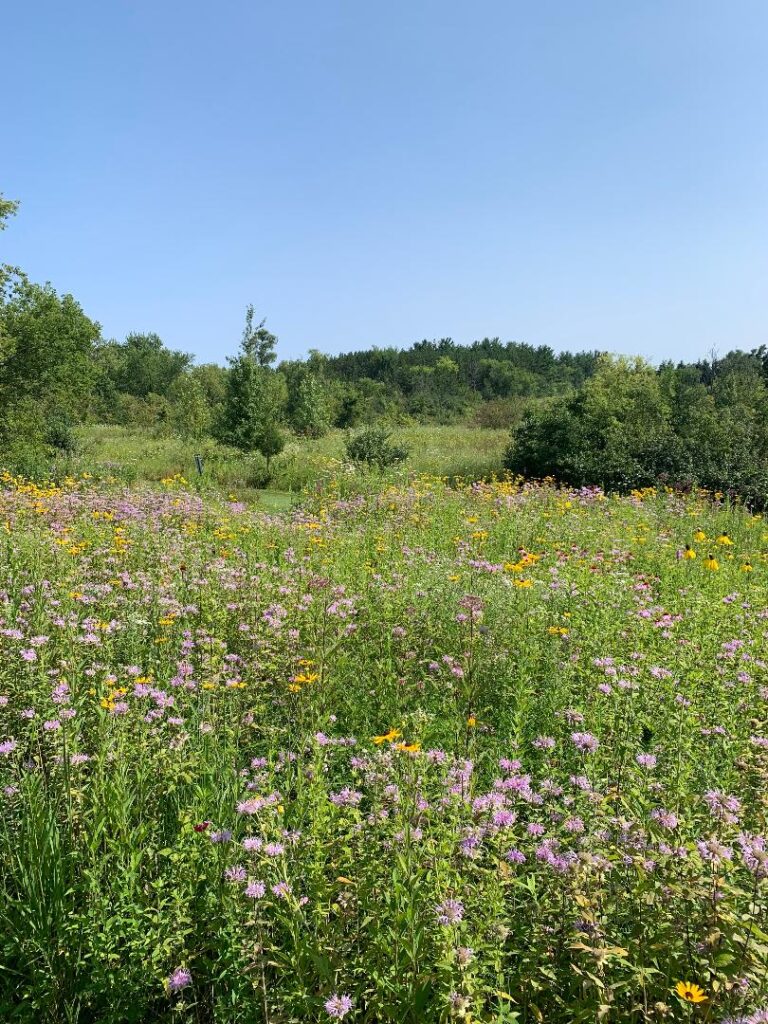
This photo was taken in 2024.
The constant battle to eradicate invasive plants and shrubs was becoming exhausting for Diane. Her usual method of pulling or cutting and a brush application of a glyphosate mixture only goes so far for unfriendly plants like common and glossy buckthorn (Rhamnus cathartica L.), Canada thistle (Cirsium arvense) and a variety of unidentified honeysuckle (Lonicera spp.). These plants, along with others, were all too common on her prairie. Dotting the prairie in all its glory was non-native Queen Anne’s lace (Daucus carota). The native gray and red twig dogwoods (Cornus racemosae, C. sericea) had also become a bit prolific, so reducing those populations was also something we hoped to accomplish with a burn.
Surveying the land and mapping out our burn area was an important detail we needed to consider first. This property not only contained several acres of dry prairie brush, but it was also surrounded by several pine and evergreen trees. Nearby neighbors were notified, and the local Raymond fire department was put on notice. Hopefully, they would not be needed.
By late fall 2023, when conditions were right, a group of friends and family volunteered alongside dedicated Wild Ones members to help me complete my project. We were finally going to perform a controlled burn on a small section of the prairie, which was an area roughly 20 feet by 50 feet. The remaining prairie acreage would have to wait. We were not burn experts, but we did recruit the help of a fellow Wild Ones member and prairie enthusiast, Kat O’Connell Valuch, who had participated in several prescribed burns. She was extremely knowledgeable in making this project successful.
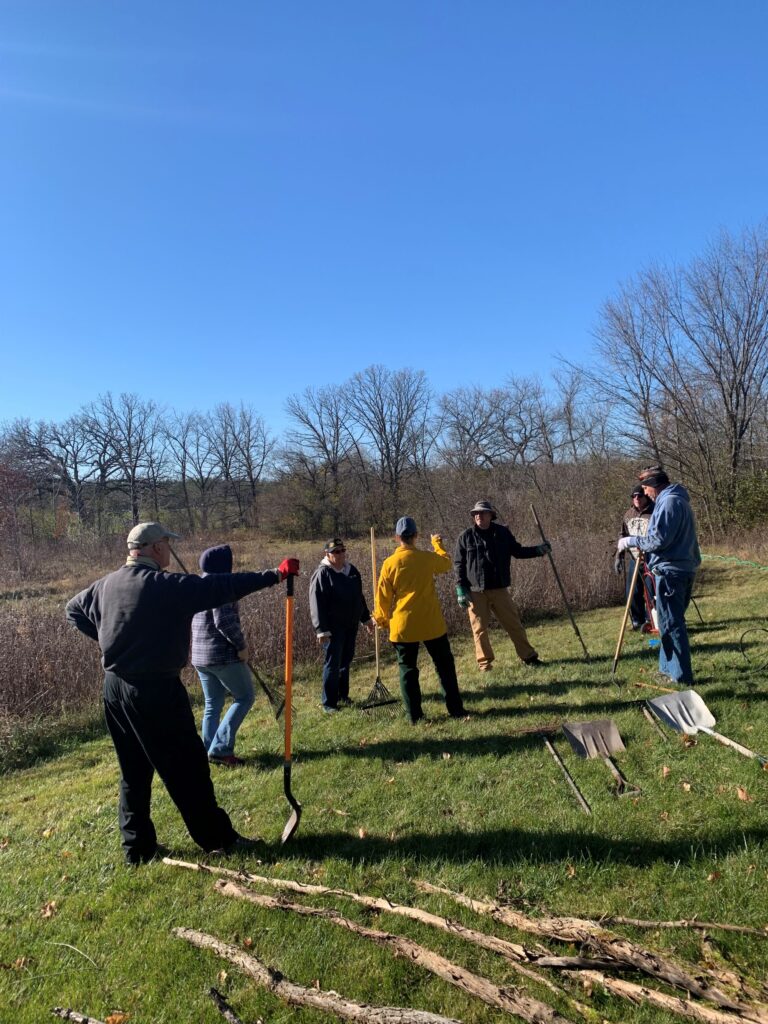
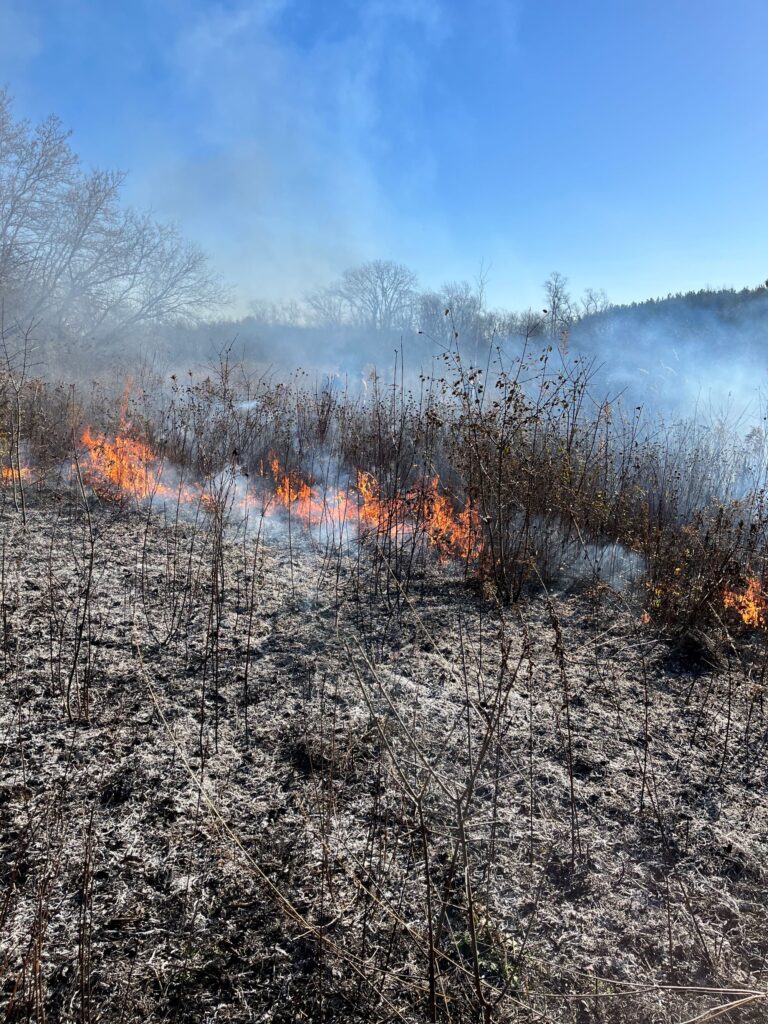
It was a sunny, crisp 41-degree day in November. Humidity was 48% with winds coming from the west/southwest at 11 mph. At around 10 in the morning the flame was lit. Everyone had an important job to do, as outlined on my plan. Our main goal was to successfully burn this area of prairie without fanning the flames toward Diane’s house or outbuildings. Following the detailed burn plan, we directed the fire in the right direction, moving it along as it burned everything in its path. By 11:30 a.m., the flames had extinguished themselves, hotspots were watered down and a successful burn was in the books. Next was the real test. Did this event achieve the results of reducing invasive and abundant woody plant material? Had plant diversity increased for our friendly pollinators? Would the tick population decline?
One week following the burn the ash had settled. We noted that the more mature woody shrubs like buckthorn, honeysuckle and dogwood remained, although they had a slight singe to them. Winter came in December and as the cold months slowly dragged, the burned area quietly slept under a light blanket of snow. Amazing things were happening!
Spring 2024 brought an overabundance of rainfall, but the plants didn’t mind. They were natives after all. Their deep roots were happy. Young seedlings were enjoying the ash-fortified soil. By early spring the burned area was regenerating, and everything was in bloom! Of course, the rabbits and deer returned on cue to their salad bowl of natives, but these plants were hearty. As spring continued, we noticed the area attracted more pollinators like bees. But the area also provided better habitat for wildlife. (We all know we can rarely control populations of deer or rabbits.) The controlled burn did help reduce the Queen Anne’s lace and Canada thistle … for now, so vigilance will be key. We also noticed that the tick population was lower, but that may have been an anomaly due to the wet spring.
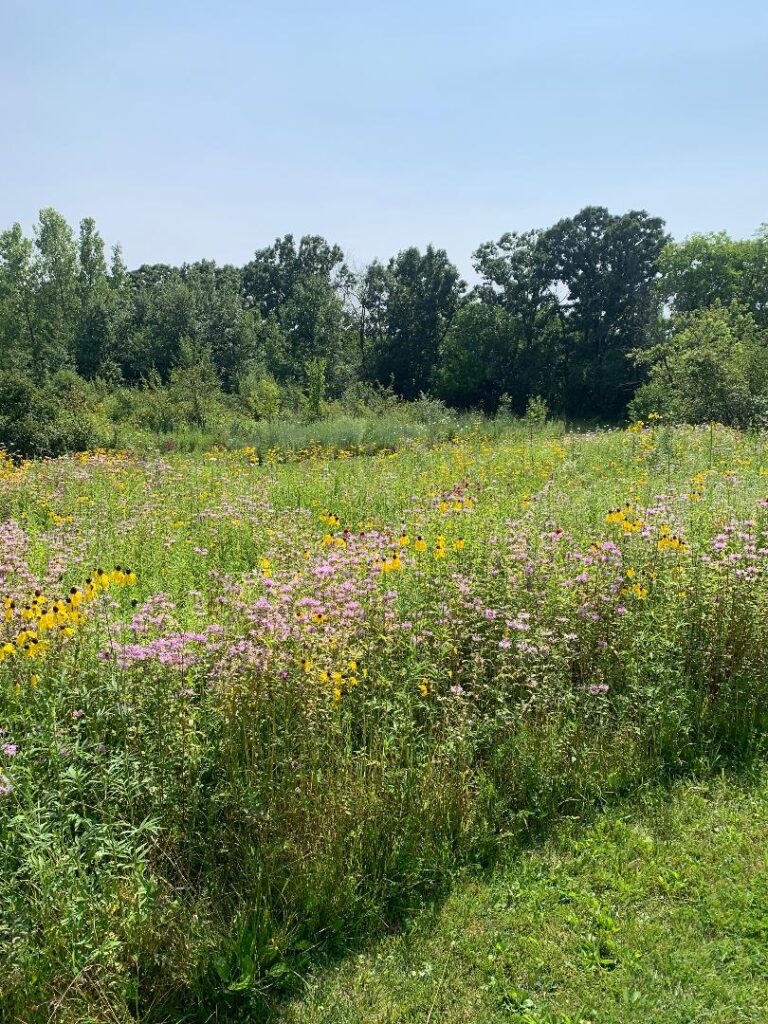
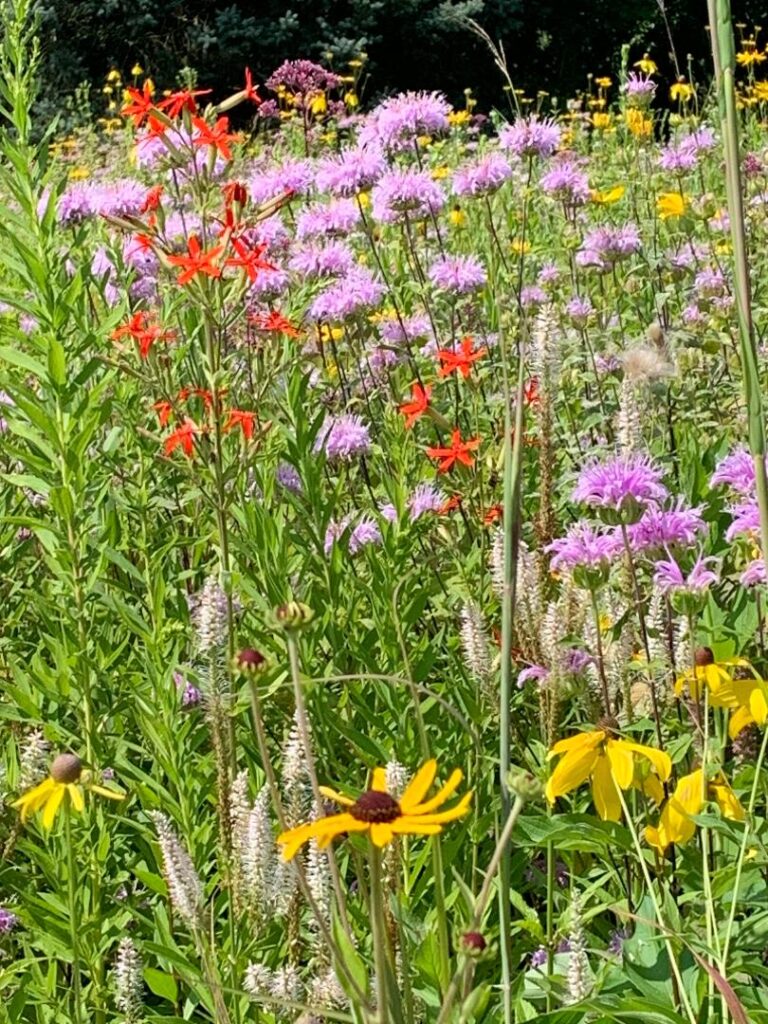
Continued burns will be needed to improve the prairie, rejuvenate the soil and allow native plants to flourish. Watching the prairie come back to life with renewed vigor was truly rewarding. After a full year of transformation, the prairie and I both gained something beneficial from the burn. Performing a controlled burn is a reminder of how fire, when managed wisely, can be a powerful tool in restoring and enhancing our natural landscapes. Yes, fire was indeed good, but having a passion for natives and giving them the right prescription of an occasional burn was even better!
Nicole Riendeau is a member and director of the Wild Ones Root River Area (Wisconsin) Chapter. She thanks Diane Battisti for being a good steward of the land and allowing her to learn from the burn.