
Those spikey structures on plants are not all thorns. There are three distinct types: thorns, spines, and prickles. While all can “stick” you, they differ in where they form and how they develop.
Of course, it does not matter what kind of spikey structure sticks you; you use language that you should not use. The three possible sticky or spikey structures that arm plants include thorn, spine and prickle. Thorns and spines are always on the stem, while prickles can be on a stem, leaf, or fruit. Thorns always have vascular tissue; spines may or may not have vascular tissue; and prickles never have vascular tissue. Leaves or a leaf may be produced on a thorn. There is a lot of confusion over the use of these three words and are often used interchangeably. The spikey structures on roses are actually prickles, but every rose has its thorn would not sound right with the correct anatomical term of “Every rose has its prickle”.
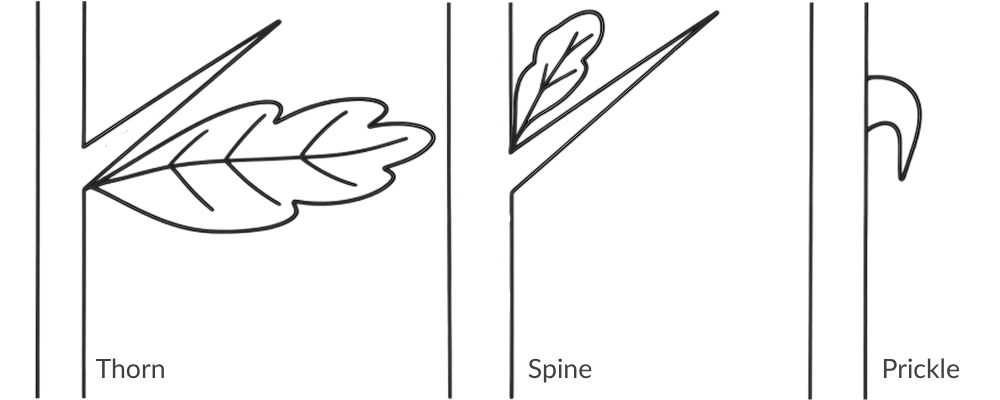
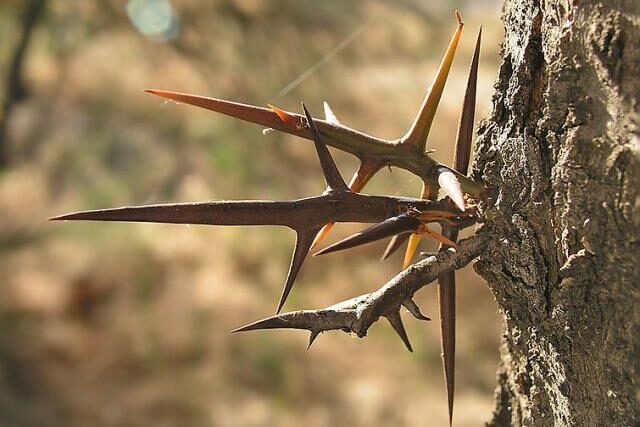
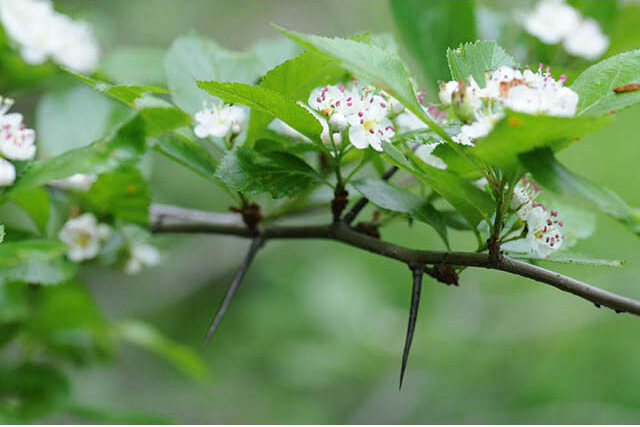
A thorn is a modified stem, so it is located at a node where the branch should be. It would be just above a leaf or leaf scar where the lateral bud is located. Lateral buds usually develop into lateral stems or branches but in some plants they develop into thorns. Also, a thorn can be branched like a stem, whereas a spine or prickle is not branched. The best example of a thorn is honeylocust (Gleditsia triacanthos) but also in hawthorn (Crataegus including mayhaw), crabapple (Malus), and firethorn (Pyracantha). Some spikey plants that seem to have thorns because of the name, like Jerusalem thorn, are actually armed with spines.
Spines are modified leaves and thus are found where a leaf or a part of a leaf should be found. Spines would be located just below a lateral branch. Several spines are modified stipules. Stipules are part of the leaf that are in pairs and located on the stem at the base of the leaf. The best example of this is black locust (Robinia pseudoacacia) with its paired spines at the base of the leaf. Other examples of stipular spines include sweet acacia (Acacia farnesiana), osage orange (Maclura pomifera), cactus (Opuntia spp.), Jerusalem thorn (Parkinsonia aculeata), honey mesquite (Prosopis glandulosa var. glandulosa), gooseberry (Ribes curvatum), trifoliate orange (Poncirus trifoliata), and jujube (Ziziphus celata).
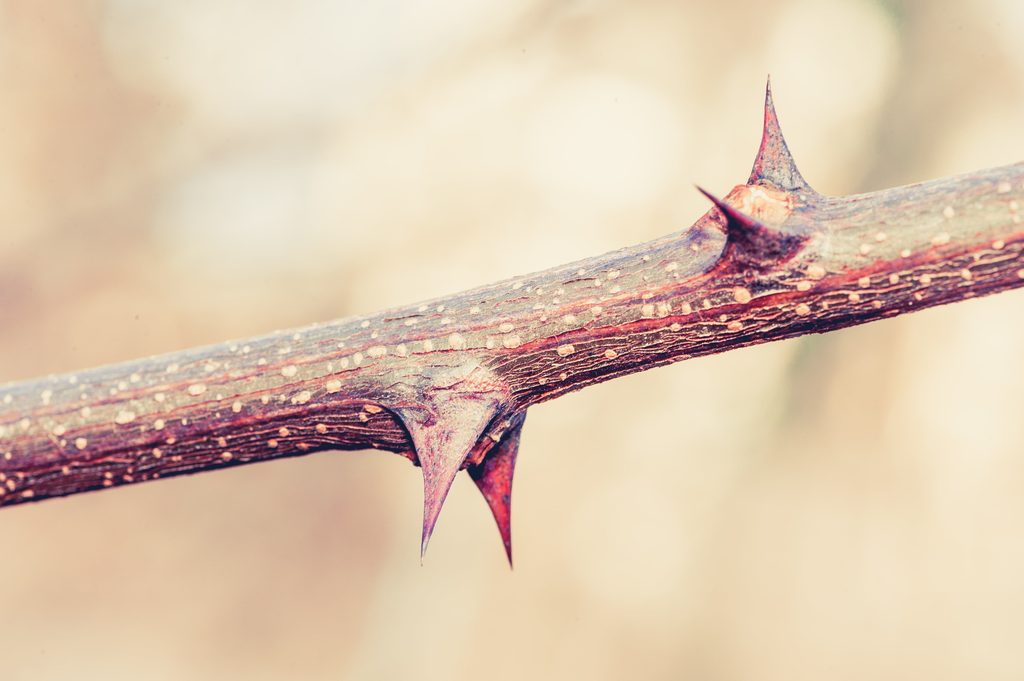
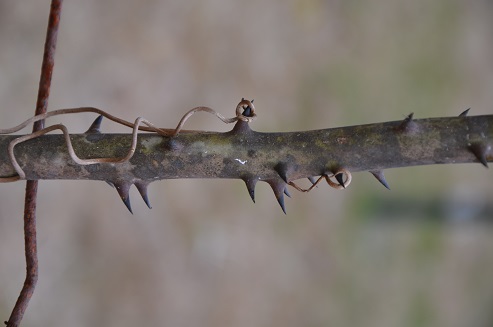
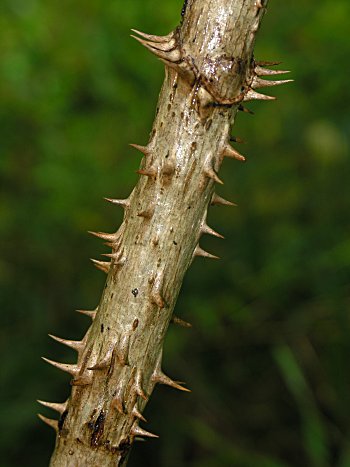
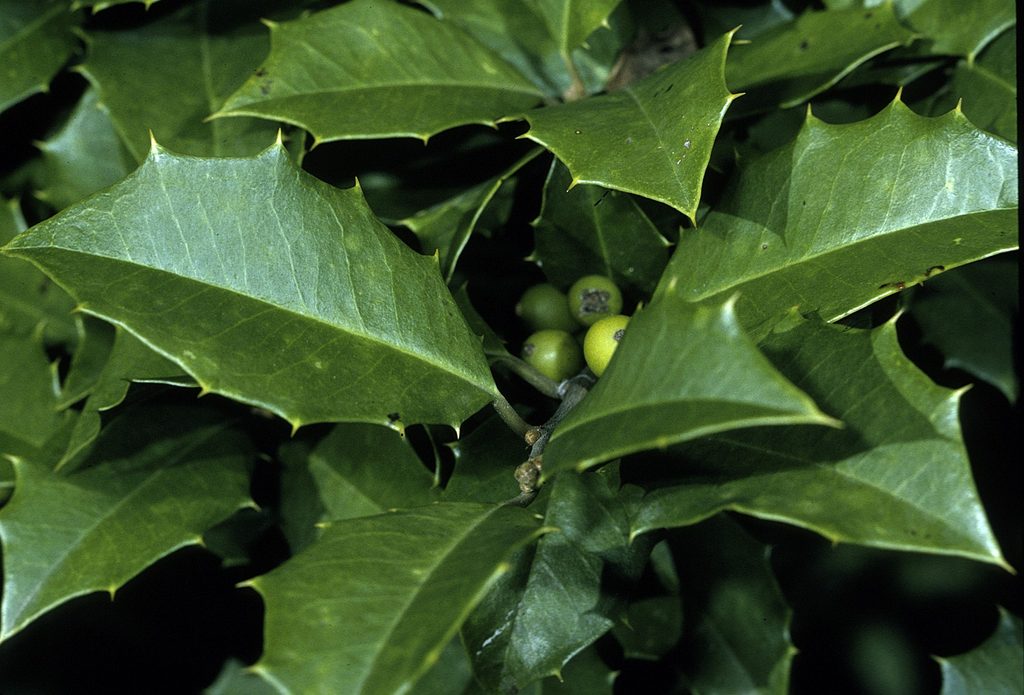
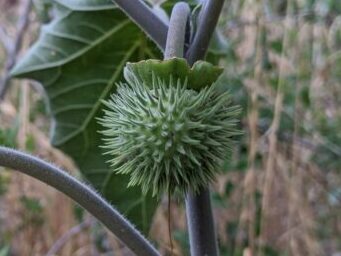
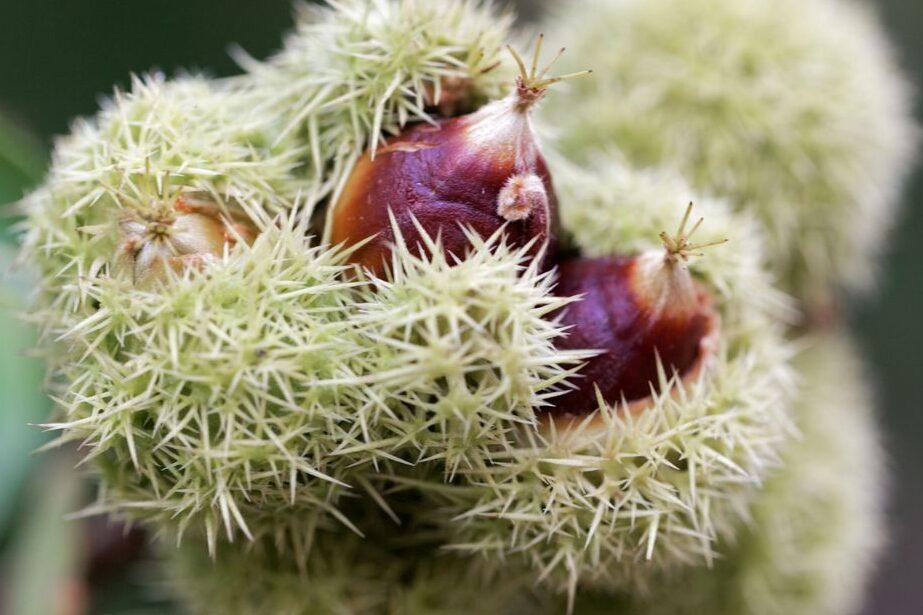
Prickles are outgrowths from the epidermis of the stem or leaves. You will note that prickles are not organized and can occur anywhere on the stem or the leaf, including the blade and/or petiole. The ones along the margins of leaves are somewhat organized. The marginal prickles on leaves are often called spines and the leaves are said to be spinescent, common in several holly (Ilex) species. Prickles on the stem are found in smilax, toothache tree (Zanthoxylum clava-herculis), devil’s walking stick (Aralia spinosa), rose (Rosa spp.), blackberry and dewberry and other brambles (Rubus spp.). Some herbaceous plants produced prickles on the stem or leaves including horse nettle (Solanum caroliense) and thistle (Cirsium spp.). Some plants produce prickles on the fruit as in chinquapin (Castanea pumila) and jimson weed (Datura stramonium).
This article is republished with permission from Dr. Charles Allen’s Allen Acres Bed and Breakfast newsletter.