
Last year, I learned the hard way what happens when you “leave the leaves.” A windy fall relocated mine from their neatly raked homes in garden beds and around trees. Scuttered across driveways and into the neighbors’ yards, those bits of garden gold were mown and blown and bagged in the name of a “tidy” neighborhood. I ended up quietly fishing them out of landscape recycling bags by night.
As I look out at the carpet of leaves in my yard today- and then up at the full canopy yet to descend- I’m determined to do things differently. Here’s what I’ve learned about keeping the leaves where they belong and why it matters.
Easy ways to keep leaves from wandering
Keeping leaves in place is critical for protecting overwintering life hidden within them.
1) Top your leaves with woody debris
Lay down small branches, twigs, or the cuttings from your fall pruning on top of the leaf layer. The extra weight helps keep leaves from lifting off in gusts, while creating the beginnings of a mini brush pile. If you have a mix of thick and thin branches, crisscross them so the leaves knit together rather than sliding apart. You can make it look tidy or let it go natural. Either way, it doubles as habitat for insects, toads, and other small wildlife.
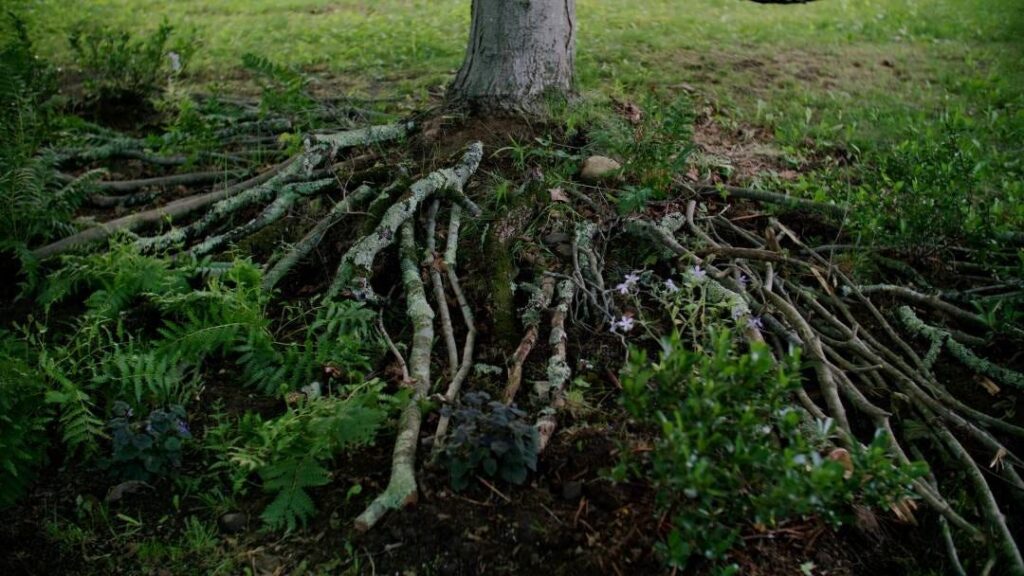
From Design Your Wild’s post Tricks to Use Now in Your Yard
2) Contain your leaves with a low twig fence or wattle edge
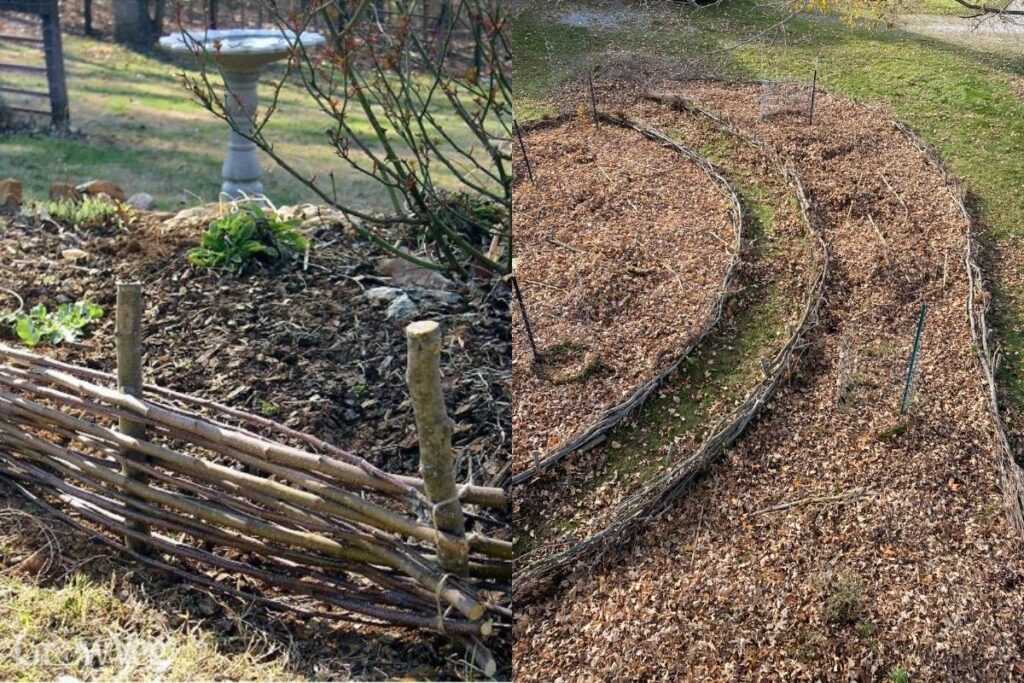
Collect fallen sticks about pencil to thumb thickness and weave them between a few short upright stakes to form a low barrier; six to ten inches tall is usually enough. This simple wattle fence keeps leaves from tumbling onto paths or lawns. It’s a centuries-old garden technique that works beautifully in native plant beds because it blends right in. Over time, the sticks soften and decompose, adding organic matter to the soil.
3) Create a habitat pile or go big with a dead hedge
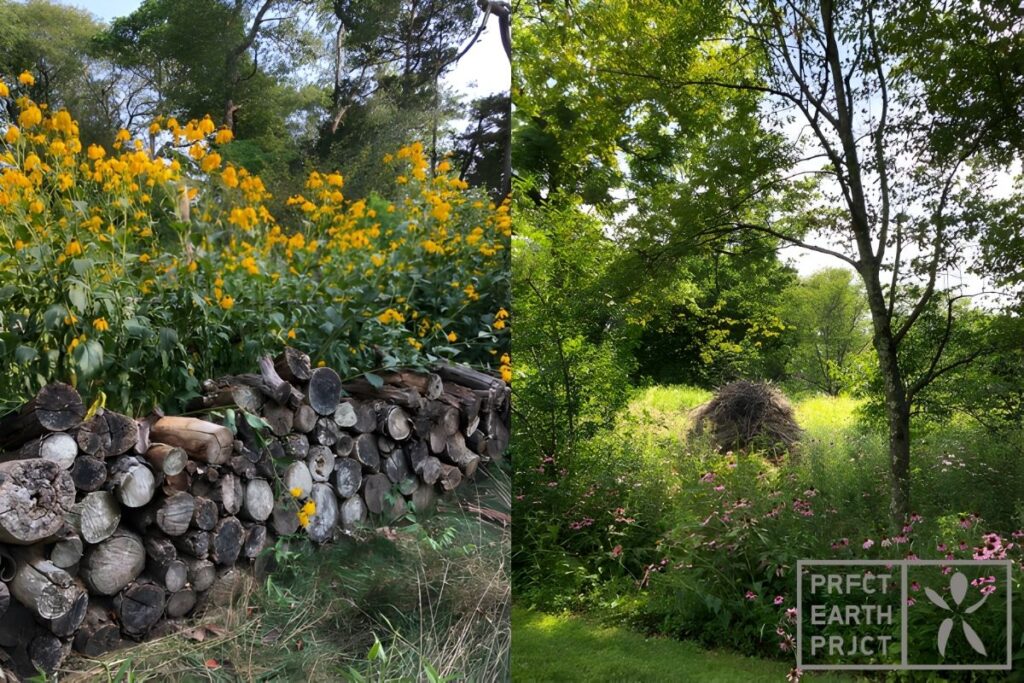
If you have the space, choose a quiet corner of your yard and build a loose mound of leaves topped with larger branches or small logs. Think of it like a lasagna: layer leaves and twigs in alternating strata. The branches on top prevent leaves from blowing away and provide crevices for overwintering insects, salamanders, and small mammals. You can make it as rustic or sculptural as you like.
4) Set up temporary windbreaks
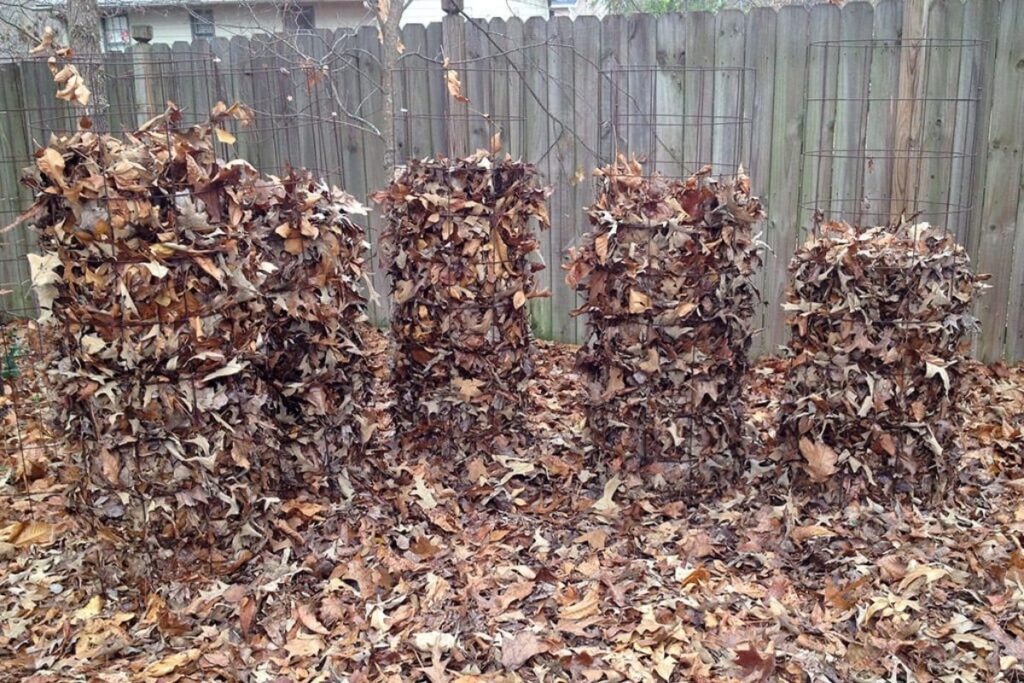
In exposed spots, short runs of burlap, snow fencing, or chicken wire can hold leaves in place until spring. For small beds, even a single section of wire fencing curved into a semicircle around the windward edge can make a big difference. If you want something reusable, build a leaf corral: form a circle from hardware cloth or wire mesh about three feet across, fill it with leaves, and let them settle into leaf mold by next year.
5) Weigh leaves down with strategic wetting
Right before a windy day, give your leaf-covered beds a quick spray with the hose. Damp leaves mat together just enough to resist being blown away but still allow air flow. If you get a timely rainstorm, let nature do the job for you.
Maintenance for your leaf layers
Leaving the leaves doesn’t mean walking away until spring. A few simple steps through the winter can help maximize the benefits of leaving the leaves.
- Keep the layer aerated
Use a few small branches or twigs on top to keep the pile loose and allow air circulation. This prevents mold and helps moisture move through. In deep beds, you can also gently lift or “fluff” compacted areas midwinter with a rake. - Watch for runoff or pooling
If leaves start channeling water or forming soggy clumps near downspouts or low areas, move some aside or mix in coarser material. Water should be able to percolate through, not sit on top. - Mix materials if needed
If your tree canopy is dominated by one type of heavy leaf (oak, magnolia, or sycamore), blend in lighter ones like birch, hickory, or maple. This keeps the mix airy and balanced for decomposition. - Keep edges tidy
A crisp border or path edge helps the garden look intentional and prevents leaves from creeping into unwanted spots. You can use short wattle fences, edging stones, or simply rake clean lines after big winds. - Check for volunteer seedlings
In spring, if any opportunistic tree seedlings sprout in your piles, pull them early while the soil is soft. The same leaf layer that shelters pollinators also makes a nice seedbed for maples and oaks.
But I have too many leaves!
As Doug Tallamy shared in a recent webinar, “My son bought a house a few years ago. He called me up in the fall and said, ‘Dad, I’ve got too many leaves.’ I said, ‘Put them in your flower beds.’ He said, ‘I don’t have enough flower beds.’ I said, ‘Exactly.‘”
Doug’s right—put leaves everywhere! Leaves belong on the ground, feeding soil and sheltering life. But there’s a limit to how much is helpful. You don’t want to smother your garden beds or pile leaves against tree trunks. And you definitely don’t want to spend spring digging suffocated plants out from under a leaf avalanche.
I learned that the hard way. My asters never made it back this spring after I discovered them buried under eight inches of leaves wedged beneath a rock. Lesson learned: a few inches is great, but more than that can block light and air.
How Thick to Pile Your Leaves
For garden beds and borders– Pile 2–4 inches deep
That’s enough to suppress weeds, insulate the soil, and create insect habitat without smothering perennials. If your leaves are light and fluffy (maple, birch), you can lean closer to 4 inches; for denser or wetter leaves (like sycamore or magnolia), stick to 2 inches.
Note on oaks: Because oak leaves are high in lignin and tannins, they break down slowly, creating a long-lasting mulch layer that protects soil and suppresses weeds. Keep oak leaf layers 2–3 inches deep in beds so they insulate without smothering.
Around trees and shrubs– Go a little deeper: 4–6 inches and stay wide
This mimics natural forest duff, helping retain moisture and build organic matter. Keep leaves a few inches away from trunks to prevent moisture-related decay.
For turf or areas you want to keep grassy – No more than ½ inch
Keep the layer very thin; too many whole leaves can block sunlight and smother grass.
A quick note on mulching leaves – Don’t.
When you mow leaves into fine pieces with a mulching mower (or regular mower), you’re also destroying the insects that use them as habitat. Many butterflies, moths, beetles, and other invertebrates overwinter inside whole, intact leaves. If you do mulch leaves, restrict that practice to maintained turfgrass areas and try to limit the amount of leaves mulched there.
If you truly have more leaves than you can use, share the wealth. Offer them to a neighbor, drop theoff m at a community garden, or checwhetherif your local landscape recycling centeacceptses them for compost or mulch. Around here, one gardener’s “too many leaves” is another’s perfect winter habitat.
The ecological value of leaving the leaves
When you “leave the leaves” in your landscape, you’re not letting things get messy. You’re restoring a natural mulch layer, supporting insects and pollinators, building soil health, and increasing resilience in your native-plant garden.
Habitat for overwintering insects
A study in residential yards found that removing autumn leaves reduced the abundance of emerging arthropods by about 17 %. More strikingly, moths and butterflies declined by ~45 % and spiders up to ~67 % when leaves were removed. A review of forest-management effects on leaf-litter arthropods shows that the leaf-litter fauna is a key repository of biodiversity, supporting decomposers, predators, and nutrient-cycling organisms. These findings reinforce that by leaving leaves in garden beds and native-plant zones you are preserving habitat for overwintering insect life, which ties directly to pollinator and biodiversity support.
Improving soil structure, water retention and carbon storage
A blanket of leaves moderates temperature swings at the soil surface, reduces evaporation, limits erosion, and fosters the formation of organic matter (“leaf mold”) that holds water and supports root systems. Research shows that leaf litter in forest ecosystems can provide up to ~90 % of the nitrogen and phosphorus inputs and ~60 % of other medium and trace mineral elements returning to the soil via litter decomposition. Over time, this layer contributes to soil carbon storage and supports the web of life beneath the surface.
Closing
This fall I’m keeping the leaves where they belong: in the beds, around the native plants, under the shrubs and trees. I’ll top them with a few twigs or branches to keep them in place, and then let nature do its work. Then I will sit back and dream of summer’s fireflies.