
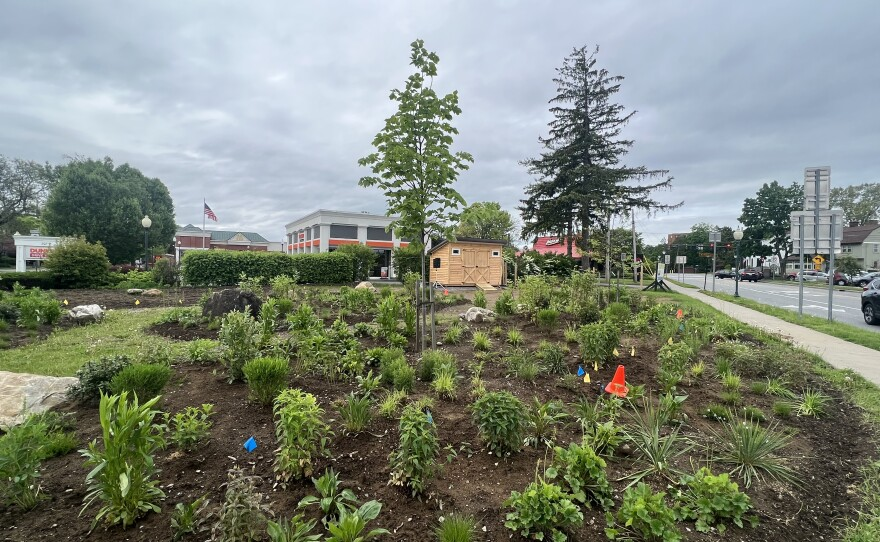
Saratoga Springs, NY- Tucked within Saratoga Springs, New York, lies an inspiring transformation: A once-abandoned gas station turned vibrant pollinator haven. The SoBro Conservancy‘s inaugural public demonstration garden, the “SoBro Triangle,” symbolizes what dedicated community action can achieve.
An Interview with Kate Maynard
As part of our Garden Side Chats video series, we visited SoBro with Kate Maynard, a board member of the SoBro Conservancy, former principal planner with the City of Saratoga Springs, and active volunteer with the Wild Ones Capital Region New York Chapter. Kate walked us through the origins, development, and impact of this community native garden project.
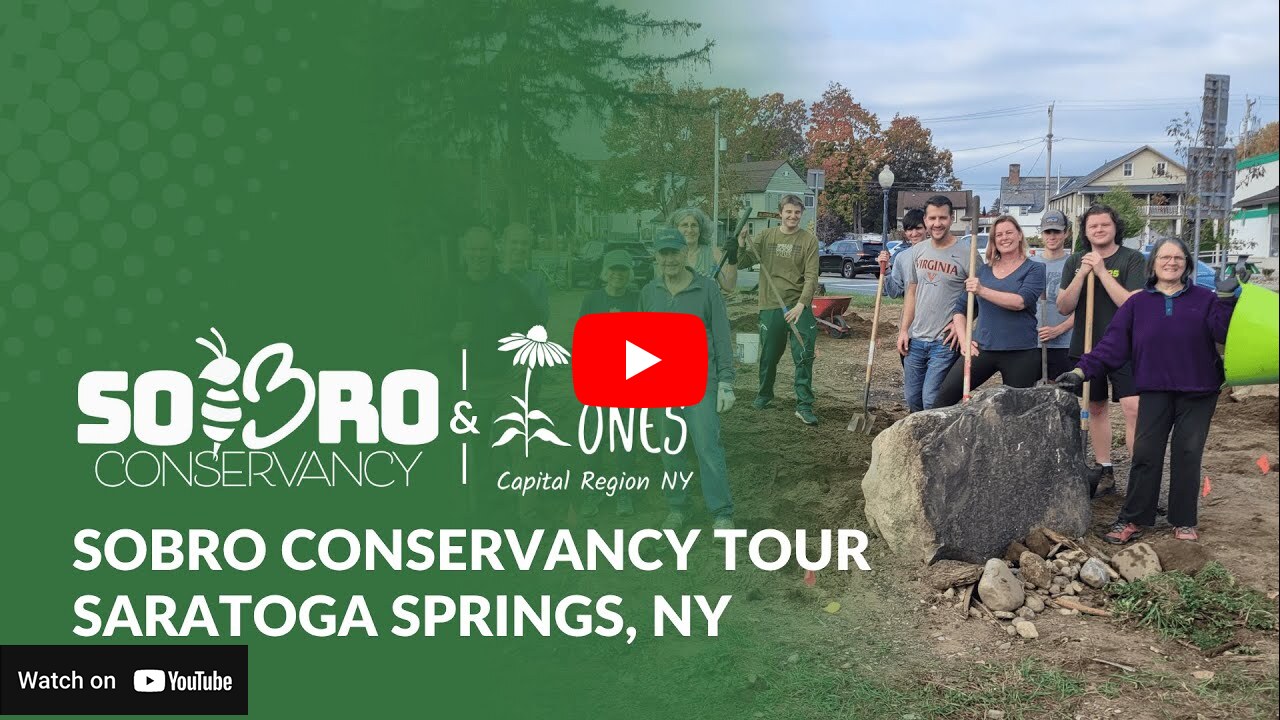
Timeline of Transformation
Since its inception, the SoBro Triangle has evolved through a series of thoughtful and community-powered milestones. Here’s a look at how it all came together:
- Summer 2022 – The Eshaghian family donates the 0.2-acre parcel at 209 South Broadway to SoBro Conservancy, launching the vision for a public green space.
- Fall 2022 – SoBro Conservancy goes public; initial soil testing and remediation begins with help from community volunteers and guidance from local experts.
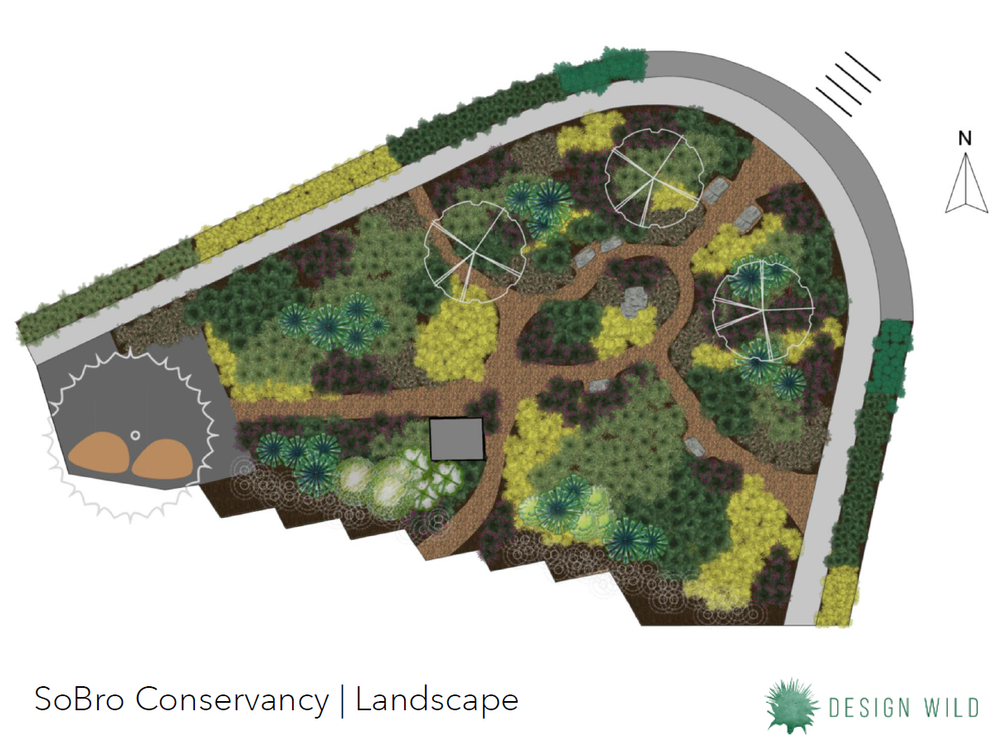
- Winter 2023 – Landscape designer Shanti Nagel of Design Wild is brought in to develop the site’s concept and planting plan.
- Summer 2023 – First trees are planted, marking the start of visible transformation.
- Fall 2023 – Volunteers install boulders, create planting beds, and shape berms.
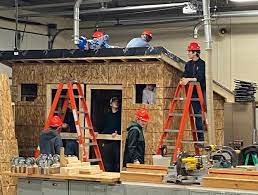
- Spring 2024 – With funding from the Saratoga Rotary Club, WSWHE BOCES students build a garden shed as part of their career training program.
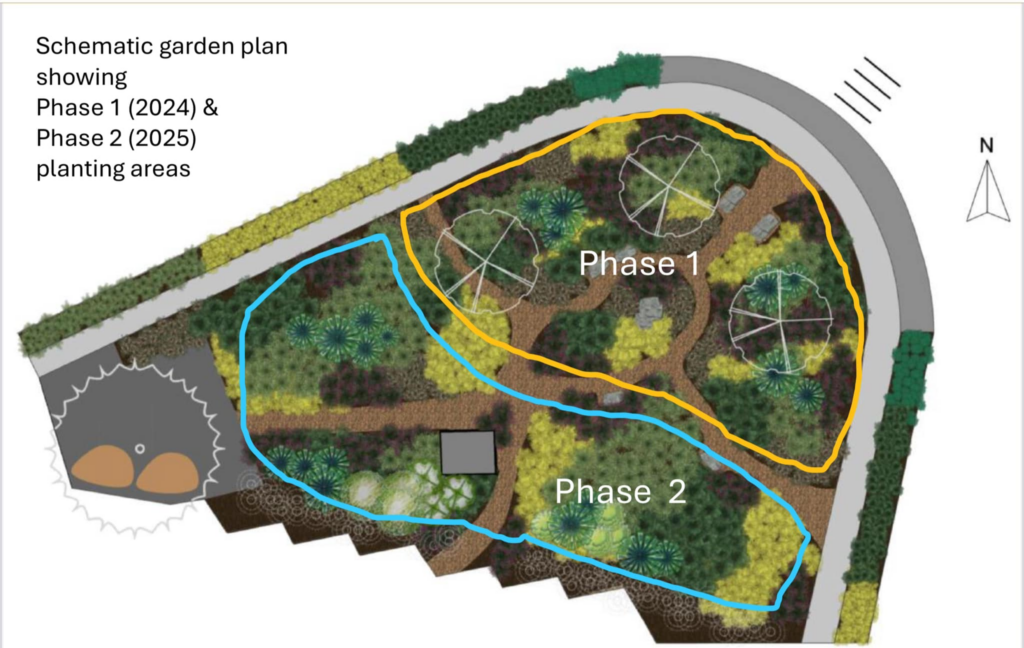
- Spring 2025 – Phase II planting is completed, thanks to robust volunteer turnout and funding from a city participatory budgeting grant.
The Vision Takes Root
When Tom Denny envisioned reclaiming this neglected city lot, he saw more than empty space. He saw potential. Partnering with passionate community advocate Kate Maynard, the vision to create an urban sanctuary for pollinators and native plants was set in motion. “Tom knew my interest in restoration and native plants. One day, during a walk around my neighborhood, he shared a top-secret plan to turn this abandoned gas station into a restored pollinator oasis.”
Community-Powered Impact
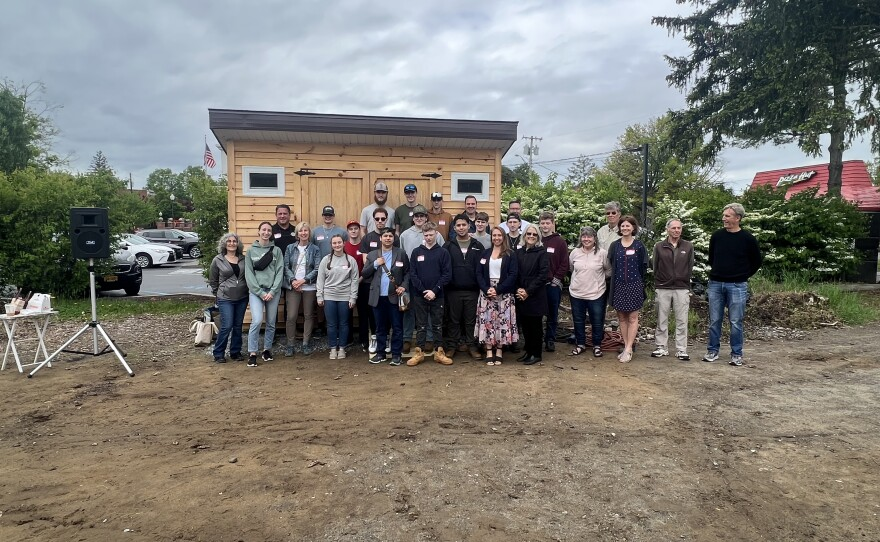
This remarkable project has been entirely volunteer-driven. Dozens of community members, local businesses, and even nearby students rallied to bring the garden to life. Volunteers tackled everything from improving the depleted urban soil and arranging donated boulders to planting native species.
Local BOCES students crafted a garden shed, transforming their classroom skills into tangible community impact. Kate recalls, “The shed was a fantastic hands-on learning experience, culminating in a ribbon-cutting ceremony honoring the students’ efforts.”
Professional Planning, Local Expertise
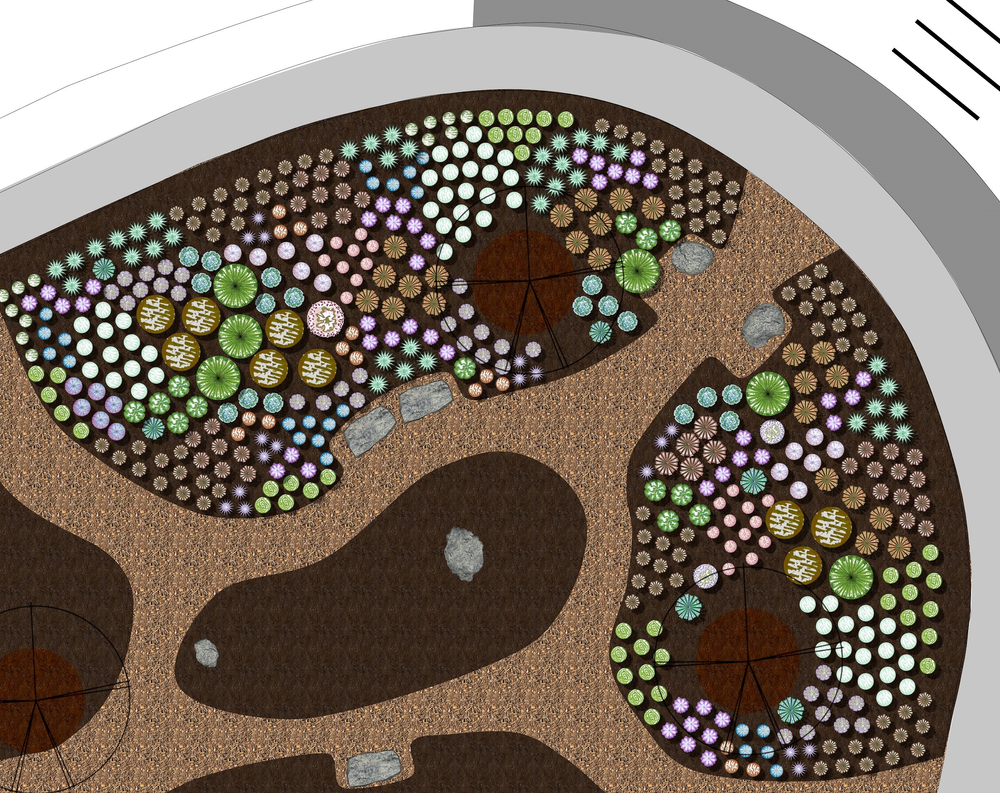
Critical to the garden’s success was collaboration with Shanti Nagel of Design Wild. Nagel, originally from Saratoga, now recognized for her pollinator gardens in New York City, provided detailed plant lists and garden plans. Kate highlights, “The only paid part of this entire project was Shanti’s professional guidance, crucial to our garden’s backbone and overall success.”
Wild Ones: A Vital Partner
“Wild Ones has been an incredible partner and sponsor, turning our vision into reality by encouraging community action and education.” notes Kates. The Wild Ones Capital Region New York Chapter provided essential support from the project’s inception, offering educational resources, volunteer recruitment, and promotional support. Demonstration gardens like this exemplify Wild Ones’ mission by providing visible proof of how native plant gardening fosters ecological health, enhances urban spaces, and educates the community.
Actionable Advice: How to Start Your Own Project
Kate offers practical advice for those inspired to launch similar community efforts:
- Engage a Diverse Community: “Cast a wide net,” says Kate. “Invite local businesses, schools, senior facilities, and neighborhood groups. Everyone has something valuable to contribute.”
- Professional Guidance: Invest in a professional designer or expert. “A well-planned design saves time, energy, and resources,” she emphasizes.
- Local Resources: Tap into organizations like Wild Ones. The Capital Region NY Chapter offers workshops, networking, and practical gardening expertise tailored to regional ecosystems.
A Pollinator Magnet in the City
Despite its urban location, the garden swiftly became a hotspot for wildlife, attracting butterflies, bees, and other insects. Kate shares a memorable moment, “We were organizing an event and witnessed two monarch butterflies performing an incredible dance right here in our garden—two years ago, this was unimaginable.” Witnessing the garden’s ecological revival has not only delighted volunteers but also provided the community with tangible education about the critical role of native plants in urban biodiversity.
Looking Forward
Upcoming plans include completing additional planting beds and installing accessible, formal paths, further inviting the community to engage deeply with the garden. Kate explains the broader vision, “Native plants are a pathway to reconnect urban residents with nature, addressing environmental challenges such as climate adaptation and urban heat islands. SoBro demonstrates how cities can enhance biodiversity through community-driven projects.”
Kate Maynard encourages others seeking similar projects to engage broadly with diverse community partners and utilize available resources, highlighting Wild Ones as a valuable guide. She sees native plants as a bridge reconnecting city residents with nature, crucial for addressing broader environmental challenges like urban heat islands and climate adaptation.
The SoBro Conservancy Pollinator Garden is a testament to what collaboration, dedication, and a passion for native plants can achieve, transforming neglected urban spaces into vibrant community treasures.