
At Wild Ones, we’re dedicated to connecting people and native plants. Our Native Plant News blog delivers the latest stories on native plant conservation, scientific discoveries, and habitat restoration from across the nation. This monthly, volunteer-written feature is designed to educate, engage, and inspire action, empowering readers to support biodiversity and promote sustainable landscaping with native flora.
Ohio: Preserving the Appalachian Mountain foothills
Almost 3,000 acres of land in the Appalachian Mountain foothills is now conserved thanks to a donation by a private landowner, whose family has owned this land for a century, to the Athens Conservancy. The Nature Conservancy will hold a conservation easement and The Athens Conservancy will manage the land. This approach will provide two layers of protection and ensure that this land is protected forever.
Betty Lowe, the landowner, said, “I am donating my farm to Athens Conservancy and a conservation easement to The Nature Conservancy so as to conserve the property from future development, prevent mining and major disturbance of the land, preserve native biodiversity, allow the public to walk and enjoy nature, and encourage appreciation and protection of the natural world. May this be an inspiration for other landowners to protect their properties.”
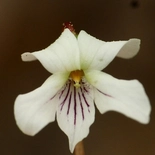
Bog White Violet(Viola lanceolata)
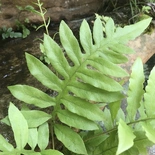
Netted Chainfern(Woodwardia areolata)
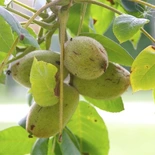
Butternut(Juglans cinerea)
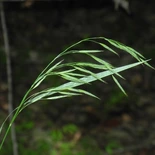
Nottoway Valley Brome(Bromus nottowayanus)
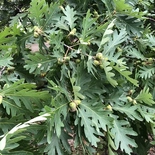
White Oak(Quercus alba)
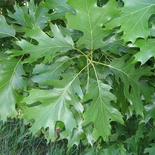
Black Oak(Quercus velutina)
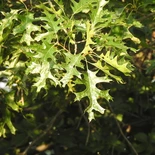
Scarlet Oak(Quercus coccinea)
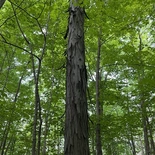
Shagbark Hickory(Carya ovata)
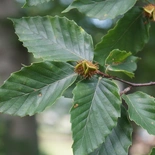
American Beech(Fagus grandifolia)
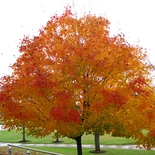
Sugar Maple(Acer saccharum)
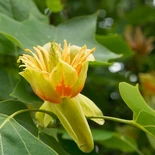
Tuliptree(Liriodendron tulipifera)
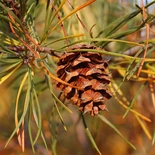
Virginia Pine(Pinus virginiana)
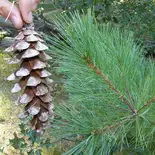
Eastern White Pine(Pinus strobus)
The property is inhabited by many important plant and animal species including rarer plant species like lance-leaved violet (Viola lanceolata), netted chain fern (Woodwardia aerolata), butternut (Juglans cinerea), and satin brome (Bromus nottowayanus). The hardwood forest that covers the area includes white oak (Quercus alba), black oak (Quercus velutina), scarlet oak (Quercus coccinea), shagbark hickory (Carya ovata), American beech (Fagus grandifolia), sugar maple (Acer saccharum), and tulip poplar (Liriodendron tulipifera). Lowe’s family has also planted more than 300 acres of Virginia pine (Pinus virginiana), white pine (Pinus strobus), and black walnut (Juglans nigra).
Landmark Conservation Effort Protects Nearly 3,000 Acres in Ohio’s Appalachian Foothills-Nature.org
Iowa: Saving the Prairie One Day at a Time
Pottawattamie County Conservation hosted their second annual Save the Prairie workday at Crescent Hill at the Hitchcock Nature Center with 45 volunteers and regional conservation groups working to restore the rare Loess Hills prairie ecosystem.
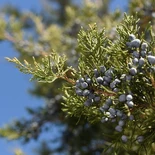
Eastern Redcedar(Juniperus virginiana)
The group spent the day removing Eastern cedar trees (Juniperus virginiana) encroaching on the prairies and the event culminated in 5.4 acres of prairie restored by the end of the day. The cedar removed was either burned, repurposed as firewood for county park campsites, or will be used in furniture building projects at Hitchcock Nature Center. Conservation groups that attended included the Iowa DNR, The Nature Conservancy of Iowa, Harrison and Woodbury County Conservation, and Fontenelle Forest. The event was sponsored by a grant from the Iowa Prairie Network. Plans are already in place for a Save the Prairie event in 2026.
Less than 0.1% of Iowa’s original prairie remains due to human development. The Loess Hills, including Crescent Hill, is home to some of these last remnant prairies. Prairies are critical to Iowa’s biodiversity, soil health, and erosion control.
Save the Prairie 2025 Restores 5.4 Acres of Rare Iowa Habitat-PottCounty-IA.Gov
Michigan: Bringing Back the American Elm
Almost extinct due to Dutch elm disease, The Leelanau Conservancy is restoring the American elm tree (Ulmus americana) in the Palmer Woods natural area.
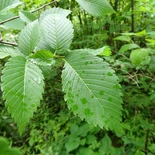
American Elm(Ulmus americana)
Using cuttings from the few surviving elm trees and growing them out, conservation groups and state agencies are now reintroducing disease-resistant elms into Palmer Woods. The conservancy is also working with the U.S. Forest Service to see if using biochar could help elm survival by improving water and nutrient retention in the sandy soils characteristic of this area.
Washington: A Rare Ice Age Plant is in Trouble
The Center of Biological Diversity is petitioning the United States Fish and Wildlife Service to list the Columbia yellowcress (Rorippa columbiae) under the Endangered Species Act.
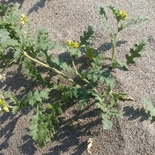
Columbian Yellowcress(Rorippa columbiae)
This rare flower from the mustard family, with small yellow four-petaled flowers, has bloomed in Washington, Oregon, and northern California since the Ice Age. They typically grow at the high-water mark of riverbanks, lakeshores, and wetlands and their life cycle matches the natural water cycles of their habitat. Damming the Columbia River, off-road vehicles, and livestock grazing has been detrimental to this species and now the remaining populations are found mostly in the Hanford Reach of the Columbia River.
The Columbia yellowcress was previously considered for Endangered Species Act protection but lack of information of the species’ status in 1993 kept the species from being listed.
Rare Eastern WA flower has bloomed since the ice age. It’s close to extinction-Tri-CityHerald.com
Texas: Another Endangered Species Act Success!
After a 5-year status review, the United States Fish and Wildlife Service has determined that the survival of the Lloyd’s mariposa cactus (Sclerocactus mariposensis) is no longer threatened and is recommending its removal from the Endangered Species Act list.
Recovery of this cactus was accomplished thanks to partnerships with local governments, state and federal agencies, and private organizations in the United States and Mexico. Large populations of Lloyd’s mariposa cactus have been found at Big Bend National Park as well as parks and wildlife areas in Texas and Mexico and these areas will continue to protect this species.
Lloyd’s mariposa cactus is covered with white or gray spines which form a globe shape up to 4 inches high and 2.4 inches around. It can be found in open desert scrublands in full sun and it’s white and pink flowers are pollinated by sweat bees.
Five-Year Status Review Recommends Delisting of Lloyd’s Mariposa Cactus-FWS.gov
Live in a Drought-Prone Area? Try Xeroscaping!
According to the Environmental Protection Agency, the average U.S. family uses 320 gallons of water every day and ⅓ of that is used outdoors including on the ubiquitous American lawn. Even more than that is used by people who live in dry places like the western states. As the West experiences prolonged drought, some landowners are looking into low-water landscaping or xeriscaping.
Since the idea of removing lawn and replacing it with native plants can be intimidating at first, experts like Haven Kiers, associate professor of landscape architecture at University of California-Davis, recommends starting small and taking it slowly. This can be done by expanding already existing plant beds, putting native flowers and shrubs along paths, adding a tree, or if you already have a tree, creating a bed around it as all of these small steps reduce lawn. Many cities, counties, states, and conservation organizations offer incentives and rebates to make the lawn to native plant transformation more affordable. Experts also recommend visiting a public garden or contacting a master gardener for free advice and ideas.
Increasing the amount of xeriscaping in drought-prone areas not only means less pesticides and fertilizers, more food and nesting grounds for wildlife, as well as reducing a increasingly scarce resource: water. “Potable water is going to become harder and harder to come by,” said Richardson, executive director of the Ecological Landscape Alliance, a nonprofit that promotes sustainable landscaping. “Lawn reduction is a fantastic way to limit the use of water in the landscape.”
Move over, green lawns: Drier, warmer climate boosts interest in low-water landscaping-WMUR.com
Hawaii: Honoring the September 11th First Responders
More than 100 volunteers from the University of Hawai’i at Mānoa, Kapiʻolani Community College, Hawaiʻi Department of Land and Natural Resources (DLNR), as well as the local community planted 400 native plants in honor of the 441 first responders that died at Ground Zero September 11, 2001.
The species planted included pōhinahina, naupaka kahakai, and maʻo hau hele (yellow hibiscus) at Keʻehi Lagoon Memorial State Park . Volunteers also helped clean the beach and the park and learned about Keʻehi Lagoon. “There is no better way to honor the brave first responders who gave their lives saving others than through service,” said Liane Akana, the University of Hawaii-Mānoa Office of Civic and Community Engagement Program Specialist. “By volunteering, we turn what was once a day of tragedy into a day of coming together to do good.”
This event not only honored those that had fallen that day but also supported 9/11 Day of Service, a national initiative to encourage Americans to spend each September 11th helping others and coming together in unity and compassion.
400+ native plantings at Keʻehi Lagoon honor 9/11 first responders-Hawaii.edu