
When I read the news, one word leaps off the page: “elderly.” Articles matter-of-factly describe as “elderly” people who are MY age — sometimes even younger! Me, elderly? Hmmm. Aches and pains that weren’t there a decade ago? Check. More than a few strands of gray hair? Check. Learning new skills a bit more slowly? Check. OK, I admit it. I’m “elderly.”
This is an excerpt from the Wild Ones Journal
Current members can log in to read the latest issue or check out the Journal Archives.
Compared to most of human history, our current elderly generation has led fortunate lives indeed, but our lifestyle, though unintentionally, has led to climate change and loss of biodiversity. The world will probably hang together long enough for our generation, but what about the future? As Wangarĩ Maathai, a Nobel Prize-winning Kenyan environmental activist, said: “The generation that destroys the environment is not the generation that pays the price. That is the problem.”
Babies born now will be “elderly” by 2100. If we continue on our current path, what kind of world will they be living in? What about their grandchildren, great-grandchildren and beyond? We’re already seeing unsustainable declines in biodiversity and life-threatening weather extremes.
Elderly?
Maybe instead of “elderly” my age group could be described as “elders,” rich with experiences and skills we’ve acquired over the years. There are a lot of us elders, too, and as birth rates fall, our percentage of the population is increasing. Free from child-rearing and often from paid work, we can be a priceless resource for restoring a healthy planet.
Recognizing this, elders have formed new organizations, such as Gray is Green, Th!rd Act, Elders Climate Action and others. Most focus on climate action — certainly worthy and necessary work. But what good is a stable climate on a dead planet?
Of course, climate change contributes to biodiversity decline, but stabilizing climate doesn’t automatically protect biodiversity. And in fact, restoring healthy ecosystems itself can help mitigate climate change.
“We are the first generation to know that we face unprecedented global environmental risks, but at the same time we are the last generation with a significant chance to do something about it. Time is running out for us to leave a legacy of which we can be proud.”
– Johan Rockström, as quoted in “The Good Ancestor” by Roman Krznaric
We, the elders of Wild Ones, can complement the work of others and help solve the twin crises of biodiversity decline and climate change that jeopardize the future of today’s children, of future generations and of all life on earth.
Benefits for us, too
Preserving life on earth may feel like too big a task for us “elderly” people, but environmental work directly benefits us, too. Research finds that:
- Being in nature is good for the mind, body and soul.
- Life-long learning improves cognitive health and staves off decline.
- Having a sense of purpose benefits older adults both physically and cognitively.
- Participating in groups connects us with other like-minded people and improves mood and cognitive health.
Participating in Wild Ones and in other environmental action activities provides all of these benefits. We’re out in nature even if only in our own yards, we’re continually learning about plants, wildlife and the environment, we have a sense of purpose and we’re participating in a group of people with similar interests. Our Wild Ones motto “Connecting people and native plants for a healthy planet” summarizes it well!
Use your own skills and passions
We each have a lifetime of experience revealing which activities and roles we’re best at and enjoy doing. We can probably find a good fit with one of the many activities and roles available in Wild Ones and in environmental action in general. We might even discover some new pursuits and skills we didn’t know we’d enjoy.
Some ideas to consider:
- Be brave! Expand your natural landscape of native plants even though it may not fit the picture-perfect lawns and ornamental plants your neighborhood may currently favor. Share your enthusiasm and knowledge about native plants and healthy landscapes with passersby. Display signs that explain why native plants and natural landscapes are important.
- Of course, not all of us can get out there and garden as we used to, but we can support a shift to sustainable landscapes by hiring one of the many new native plant-oriented nurseries and designers to design, plant and maintain our natural landscapes — much more beneficial than supporting the conventional lawn care/pesticide industry!
- Don’t underestimate the power of a conversation. Share your joy in seeing a bird or hearing its song, in seeing a bee busily foraging among the flowers. Point out to passersby who may see a butterfly nectaring in your flowers that there are no butterflies without caterpillars, and no caterpillars without their host plants.
- Work with your homeowners’ association or municipality to update weed ordinances to reflect the importance of native plants. Wild Ones has helpful resources to assist you in this important work.
- • Be the eyes and ears of scientists by participating in community science programs, which gather information needed to design effective conservation efforts. Some of these can even be done sitting by a window.(Here’s a list of some projects.)
- Take an active role in your local Wild Ones chapter. The more people helping, the more we can accomplish.
- Keep Wild Ones vibrant and growing by encouraging more “young” people to join us in our mission. (And for us elders, “young” could be anyone under 60!) Invite friends and neighbors to your next Wild Ones meeting or event.
- Respond to action alerts about proposed nature-friendly legislation. Our lawmakers need to know that a lot of us care about the world we’re leaving our children.
- Donate to Wild Ones and other environmental groups.
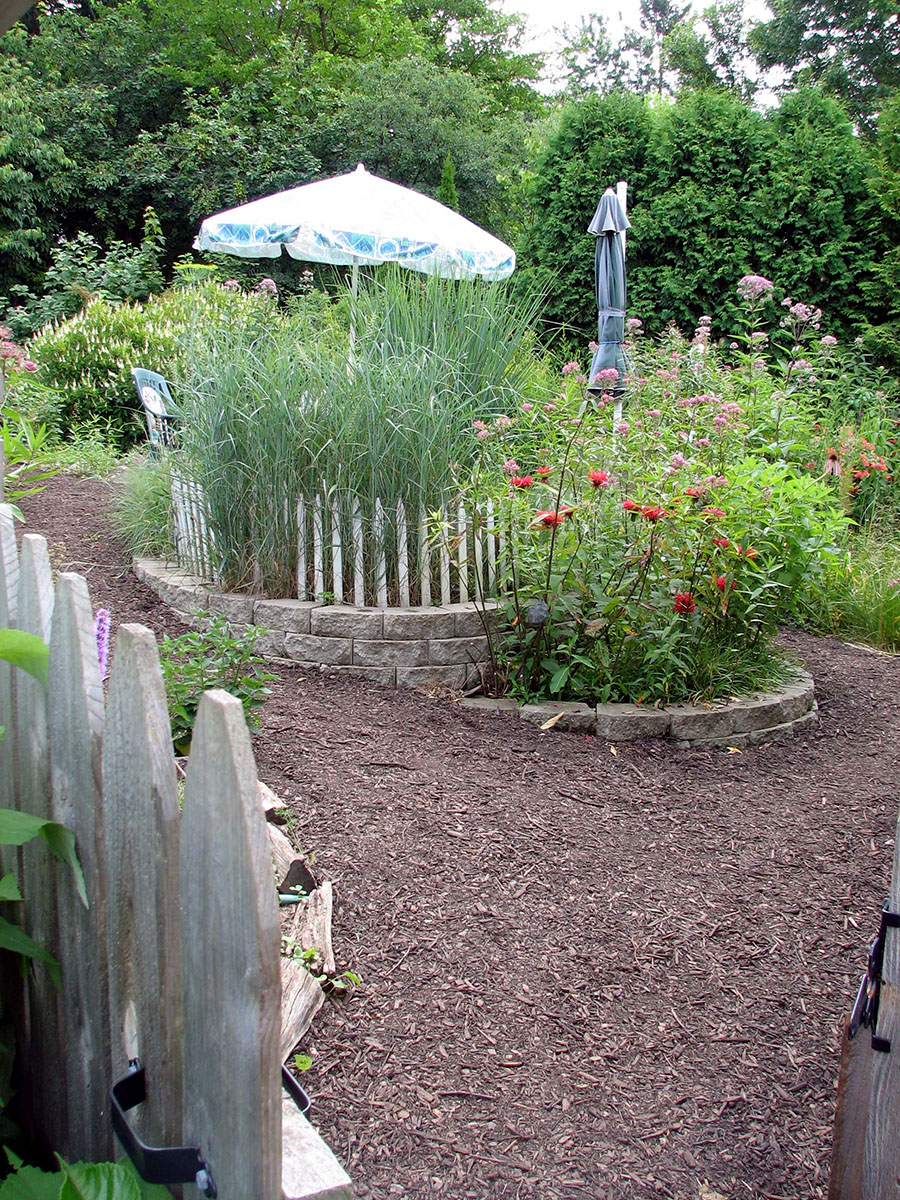
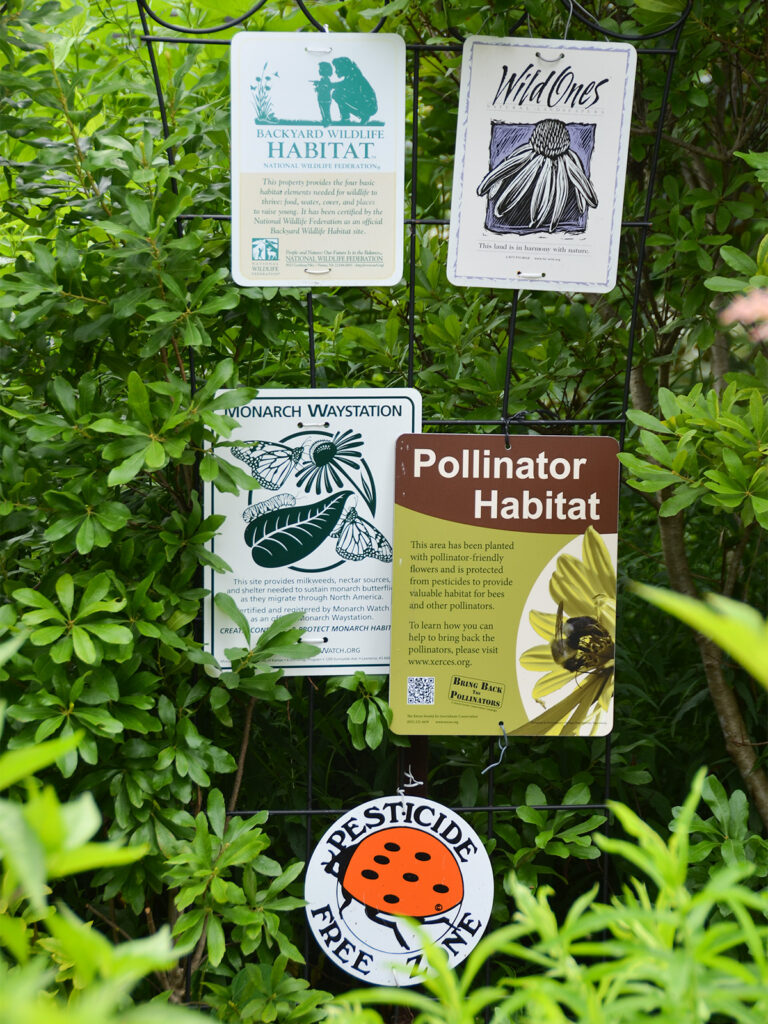
the signs displayed on Allen’s property make it clear to passersby why her landscape looks as it does
So what if we’re “elderly”?
As Robin Wall Kimmerer, scientist, author and a citizen of the Potawatomi nation says: “… elderhood is not a time for stepping back, but for stepping up, for stepping into your own power. Becoming an elder is both a precious gift and a serious responsibility — a responsibility for sharing knowledge, and for safeguarding the future of life.”
Our earth is rapidly reaching biodiversity and climate tipping points. We elders can and must work to pull us back from the edge and leave the precious legacy of a living planet for today’s children, for future generations and for all life on earth.
Allen, J. (2004). I’m ‘elderly’? So what! Wild Ones Journal, 37(2), 15-16.