
The rights-of-nature movement exists across the United States in myriad forms, and the first court case to be brought by a plant as the plaintiff was 2021’s Manoomin v. Minnesota Department of Natural Resources (DNR). Manoomin (Zizania palustris), along with the White Earth Band of Ojibwe and other individuals, brought a lawsuit in the White Earth Band of Ojibwe Tribal Court in northwestern Minnesota alleging that the DNR’s issuance of a dewatering permit to Enbridge Energy infringed on the rights of Manoomin and those of the White Earth Band.
This is an excerpt from the Wild Ones Journal
Current members can log in to read the latest issue or check out the Journal Archives.
While ultimately unsuccessful in preventing the issuance of the DNR’s permit or preventing Enbridge’s construction of the Line 3 pipeline, Manoomin v. Minnesota DNR is a test balloon for other rights-of-nature cases, particularly those involving Tribal nations’ powers and sovereignty on and off Tribal land.
At its core, Manoomin v. Minnesota DNR is about the confluence of many different tensions: state versus Tribal sovereignty, external interests versus the protection of local environments, and the rights and power of someone, or something, to protect itself in court. It is also, of course, about Manoomin.
“The food that grows on water”
There are many names for Zizania palustris, a grass which thrives in the clean, slow-moving rivers and lakes that pattern the vastness of the Great Lakes region. In English, it is most often called Wild Rice, but it is also known as Canada rice, marsh oats or blackbird oats. The French call it riz sauvage. In Dakota, it is Psíŋ. To the members of the Ojibwe Tribes of northern Minnesota, and across other parts of the broader Anishinaabe cultural region, it is Manoomin, roughly translated as “the good berry” or “the good seed.”
A fundamental part of Ojibwe identity, Manoomin is directly linked to the migration story of the Ojibwe, which began with the Tribe inhabiting the north Atlantic coast several centuries ago. The Ojibwe left this region guided by the Seven Fires prophecy’s foretelling that their journey would end once they came to the place of “the food that grows on water.” As the Ojibwe arrived in what is now northern Minnesota in the 17th century, they encountered Manoomin and adapted to this abundant and nutritious plant.
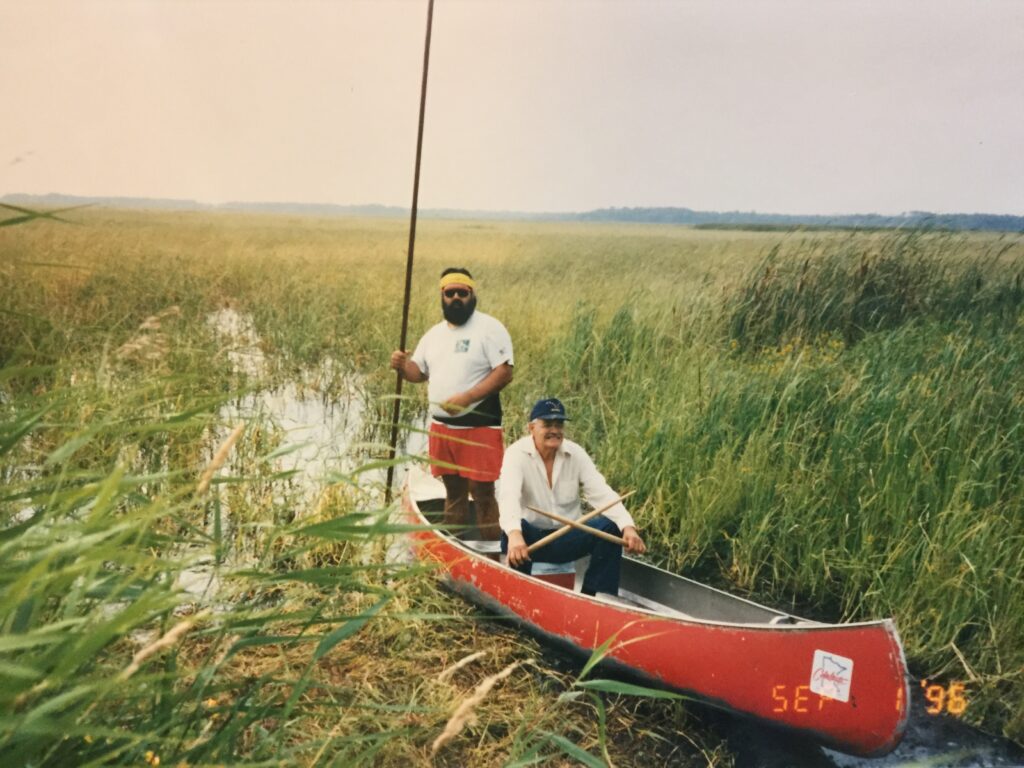
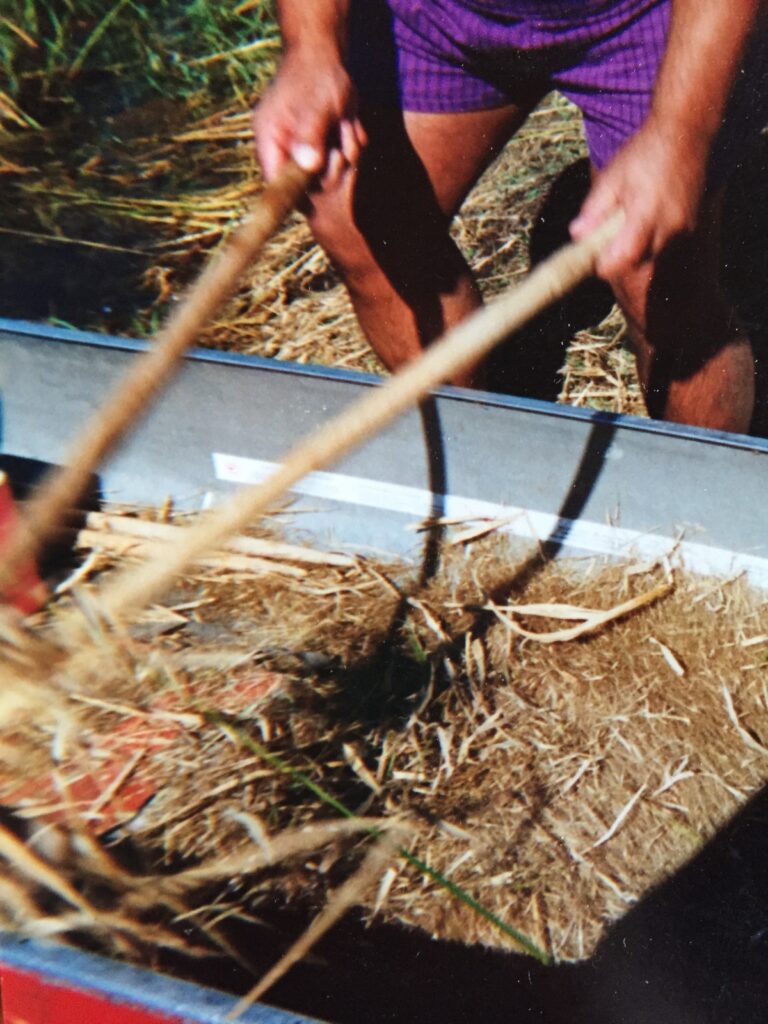
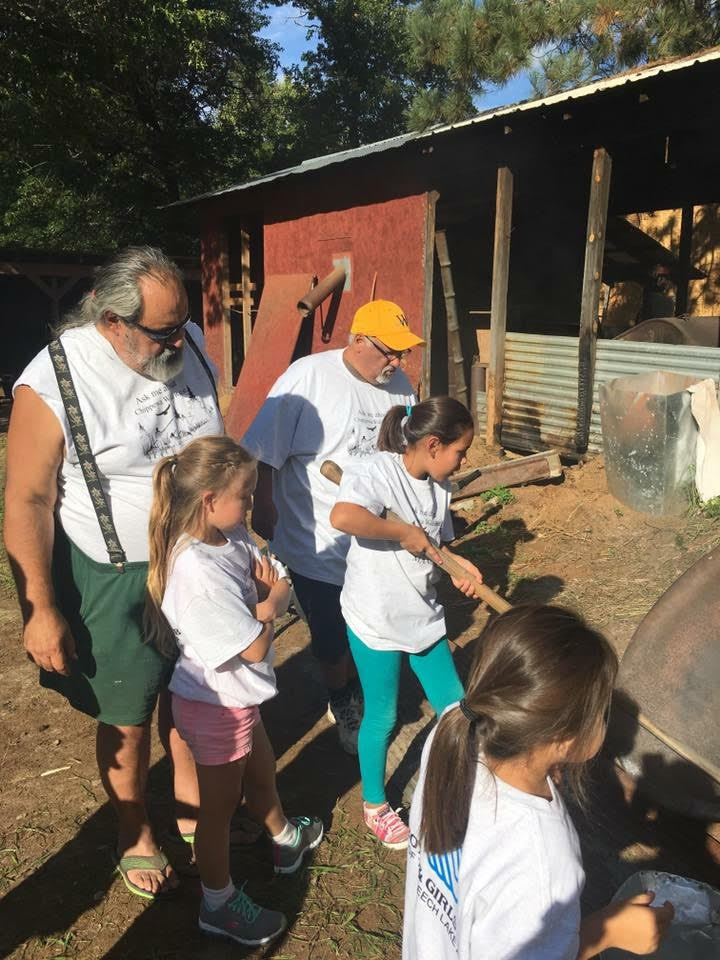
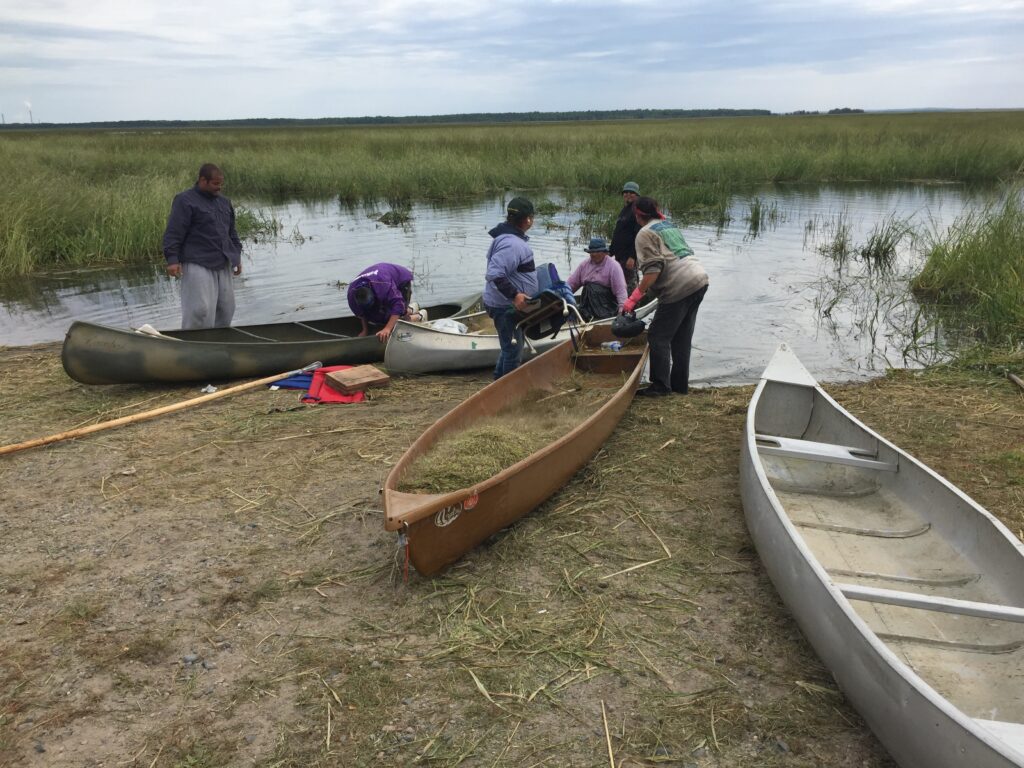
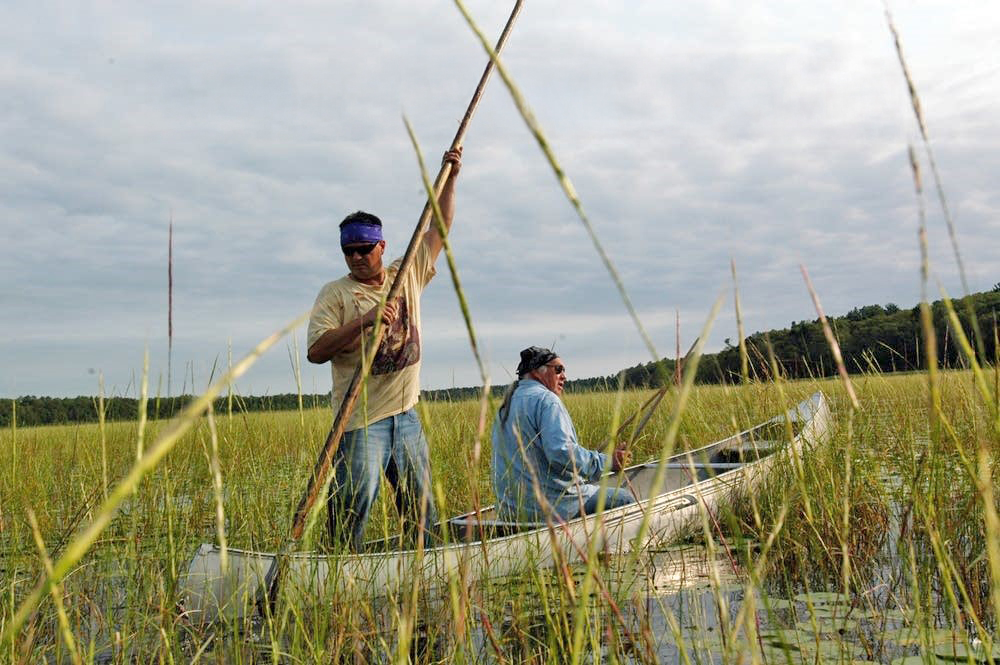
Traditionally gathered by the Ojibwe and neighboring Indigenous nations using canoes and wooden knocking sticks, Manoomin is an annual aquatic grass that grows best in the soft, muddy beds of inlets and outlets of lakes and connected rivers and streams. Growing in thick stands in ideal conditions, it often grows to 9 feet in height but can occasionally reach as high as 14 feet. High in protein and complex carbohydrates, and full of other nutrients including B vitamins, magnesium and zinc, Manoomin was and remains a staple component of the diets of many cultures of the Great Lakes region.
A robust but fragile plant, it is a bellwether for changes to water quality and environmental shifts. Manoomin is susceptible to the vagaries of weather, water pollution and human disturbance. Fluctuations in water quality, level and flow rate can greatly reduce or destroy the plant’s reproduction. These characteristics came to a head in the late 2010s when Enbridge Energy sought permits from Minnesota governmental agencies for the reconstruction and relocation of its aging Line 3 oil pipeline, which would impact Manoomin’s established habitat within the land set aside by treaty for Ojibwe hunting, fishing and gathering rights.
In light of the impending Line 3 redevelopment, a 2019 White Earth Tribal resolution noted that it had become “necessary to provide a legal basis to protect Wild Rice and freshwater resources as part of our primary treaty foods for future generations.” Subsequently, the White Earth Band passed a Tribal law titled “The Rights of Manoomin,” which holds that Manoomin has “inherent rights to exist, flourish, regenerate and evolve, as well as inhere rights to restoration, recovery and preservation.”
As a cornerstone of Ojibwe culture, a nutritious and unique plant, and as an indicator species, Manoomin was ideally suited to the role of environmental plaintiff.
Up and down in Tribal and federal court
While Manoomin v Minnesota DNR is best known as the case where a plant sued the state of Minnesota, it fundamentally hinged on the issue of Tribal sovereignty to enforce laws and rights outside of reservation lands.
The genesis of the case was that in 2021 the Minnesota DNR issued a permit to Enbridge Energy that allowed Enbridge to access and use close to 5 billion gallons of surface and ground water as part of the construction of the Line 3 pipeline. This ‘dewatering’ permit allowed Enbridge to use water located in Ojibwe treaty lands that had been designated in the 19th century as areas where White Earth Band members could gather Manoomin and hunt and fish. In August 2021, the White Earth Band, along with Manoomin, sued the DNR on the grounds that Manoomin would be harmed by Enbridge’s permitted actions and infringed on Tribal treaty rights. There were many other parties alleging other claims, but a foundational issue was the enforceability of the Rights of Manoomin Ordinance to prevent harm to Manoomin on land that Tribal members were legally allowed to gather from, but which were not Tribal property.
The DNR responded by seeking to have the White Earth Tribal Court dismiss the case, citing that the permit only pertained to off-reservation land and that Minnesota had sovereign immunity from the suit. The Tribal Court rejected this argument, and the DNR appealed to the White Earth Band of Ojibwe Tribal Court of Appeals to have the Manoomin case dismissed. Meanwhile, the Minnesota DNR brought a separate, but related lawsuit in U.S. District Court of Minnesota, the first level of the federal court system. The DNR requested that the federal court rule that the White Earth Band did not have the power to sue the DNR in White Earth Tribal Court. The federal court determined that the federal court did not have the power to prevent the White Earth Band from bringing its lawsuit, at least not at that early stage of the Tribal Court case. The DNR appealed that ruling to the Federal Court of Appeals, but before that issue could be heard, the White Earth Court of Appeals decided that the White Earth Band did not have the authority to try and regulate off-reservation activities as it related to the DNR permits.
There were no grand arguments about the rights of nature or whether or not a plant could be a plaintiff. Instead, it hinged on whether or not the White Earth Band had the right to regulate off-reservation land. White Earth Band elected to not keep pursuing the issue, and with that, the Manoomin v. Minnesota DNR was over.
The catchy mystique of Manoomin
Frank Bibeau, one of the attorneys representing Manoomin in Manoomin v. Minnesota DNR, said he thinks the White Earth Court of Appeals got it wrong. However, he isn’t too concerned about it because in the grand scheme of things, he thinks Manoomin, the rights of nature and Tribal sovereignty are going to come out on top. A former Tribal attorney for the White Earth Band and a drafter of The Rights of Manoomin ordinance, Bibeaau said he feels vindicated by everything that has happened after Manoomin v. Minnesota DNR. “It doesn’t matter whether we won or lost,” he said in a recent conversation, “because it’s the notoriety and the continuation that’s important.”
Bibeau understands the cultural power of having a plant bring a lawsuit. Manoomin as a plaintiff represented both a response to and an incorporation of what he describes as “colonized legal training.” Manoomin acts as a flare, illuminating new methods for Tribal nations to enforce their sovereign rights from within a system that has so often disregarded them. Bibeau’s hope is that cases like Manoomin will eventually force developers and state agencies to work more frequently with Tribes through emboldened Tribal sovereignty in an effort to protect shared lands, resources and ecosystems.
As Bibeau sees it, Manoomin going to court did and will continue to draw attention to the causes of Tribal rights because of its sheer unconventionality. He described Manoomin’s role as a plaintiff as “logical for many reasons” because “it would have this weird kind of catchy mystique” while also validly arising out of the cultural truth and jurisprudence of the White Earth Band’s history and law. It represented both a novel legal ideal, but also a reflection that Tribal sovereignty rests not in a government or a people, but is drawn directly from the land as the ultimate sovereign and power. Eventually, he hopes cases like Manoomin could redefine what is possible in Tribal and state courts and ideally reenforce the understanding that “to be effective, states and other [parties] are going to realize that they’re either going to have to deal with [the Tribes] or decide not to” pursue a project that may interfere with Tribal rights and laws.
Conclusion
While Manoomin ultimately did not prevail in preventing the construction and operation of the Line 3 pipeline, the case advanced awareness of the rights of nature as a novel form of jurisprudence, and Manoomin continues to hold rights and protection on the White Earth Band’s Tribal Lands. The legal system is a codification of human understanding and values and, like any other natural system, is constantly adapting and shifting. Even though Manoomin does best in clear and gentle waters, it may still have a future in the turbulence of the rights of nature movement.
Tim Lovett is an attorney, educator and writer living in Minneapolis, Minnesota.
Lovett, T. (2025). Manoomin: Wild rice, tribal sovereignty and the rights of nature in northern Minnesota. Wild Ones Journal, 38(4), 19-22.