
At Wild Ones, we’re dedicated to connecting people and native plants. Our Native Plant News blog delivers the latest stories on native plant conservation, scientific discoveries, and habitat restoration from across the nation. This monthly, volunteer-written feature is designed to educate, engage, and inspire action, empowering readers to support biodiversity and promote sustainable landscaping with native flora.
Michigan: Addressing Knowledge Gaps in Climate Research
A new study, published in Global Change Biology last month by scientists from Michigan State University, has found that previous research may have underestimated how plants respond to a warming climate.
The study aimed to fill in the knowledge gaps of previous research not accounting for winters which are also rapidly warming or addressing the impact of climate change on non-native species and how these species would respond. The MSU team used data from 126 simulated warming experiments from across the globe to investigate if increasing temperature caused changes in plant traits and communities and if the changes varied based on location, plant identity, and experimental methodology. They found that plants in temperate regions with cold winters and hot summers show greater responses to warming than plants in tropical regions with less extreme temperature variations. Some of the changes that were found was that aboveground nitrogen content decreased when warmed while plant biomass increased.
The study authors stressed the importance of climate change experimental design and suggested that future warming research should last longer to allow for multiple seasons and years of warming. Phoebe Zarnetske, professor in MSU’s Integrative Biology department and Ecology, Evolution and Behavior Program and one of the authors, said, “this important global synthesis of warming effects on plants across many ecosystems can be used to inform models of future impacts. We hope to inspire more experiments to fill knowledge gaps of climate change impacts on plants and their communities.”
Some studies might not paint full picture of how plants respond to climate change-natsci.msu.edu
North Carolina: A Big Victory for a Small Plant
After successful recovery efforts, the dwarf-flowered heartleaf (Hexastylis naniflora) is being removed from the federal list of endangered and threatened plants.
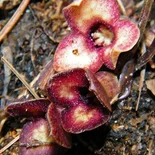
Dwarfflower Heartleaf(Hexastylis naniflora)
To preserve this tiny plant, only growing to a maximum of 6 inches from a buried stem, a large partnership was created between Duke Energy, Foothills Conservancy, Catawba Lands Conservancy, and The Nature Conservancy. When the plant was listed in 1989, there were only 24 known populations in 8 counties in North Carolina. Now there are 119 populations across 10 North Carolina and 3 South Carolina counties: 28 of those populations have more than 1,000 plants each. The plant populations will be monitored for at least 5 years post-delisting to make sure the population continues to grow.
Florida: New Highway Threatens to Displace Endangered Plant
The rare and endangered blushing scrub balm (Dicerandra modesta), a plant species that grows only in Polk County, is currently threatened by plans to build a toll highway.
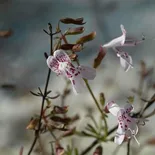
Scrub Balm(Dicerandra frutescens)
The plant is found in the Lake Marion Creek Wildlife Management Area and is part of an ecosystem that is fire-dependent. Both proposed toll highway corridors would pass close by this area. “The problem then, is if a high-speed highway is constructed immediately adjacent to this property, which is where those two alternate routes being considered would go, it’s really going to tie the hands of the land managing agency, that being Florida Fish and Wildlife Management Conservation Commission, to continue burning that site to maintain the habitat,” said Gene Kelly, President of the Florida Native Plant Society. Instead, he recommends not building the road or moving it as far west from the area where the plant is found as possible.
The Florida Department of Transportation is proposing this new highway to ease traffic congestion and will present their proposed road corridor at the end of the year and said that they will work with rare plant experts and ecologists to avoid impacting the species.
Endangered plant that only grows in Polk County threatened by proposed highway-Fox13News.com
Illinois: The Prairie State
Only 1% of tallgrass prairie remains across Illinois, Iowa, and Wisconsin, making it one of the most endangered ecosystems. Jeffrey Matthews, assistant professor in natural resources and environmental sciences, and Jack Zinnen of the Illinois Natural History Survey, have built a database to document the plant species of these vanishing ecosystems, which are far more diverse than many know.
Matthews and Zinnen built RELIX, their plant species database, by using data from studies of prairie remnants, prairies that have remained largely undisturbed by development and agriculture. They started their project by investigating over 500 plant vendors and the species found in over 1,000 seed mixes being sold in the Midwest and found that less than half of the regional native plants were found in the mix, favoring hardier and long-lived species, and certain species were over- and under-represented. Many of the species missing included early-blooming species critical to pollinator species that emerge early in the spring. More conservative and sensitive species were also missing from mixes. Because of this, restored prairies are less diverse in plants and wildlife that depend on those plants than prairie remnants. “There’s a typological mindset: ‘A prairie is supposed to look like this,’” Matthews said. “What we’re finding in all the remnants is that it’s not just typical prairie species. There are forest species, wetland species creeping in at the edges from the adjacent forest or marsh — not just the standard species that were overrepresented in the commercial landscape.” To address the lack of spring-blooming species in mixes, Zinnen suggests wild strawberry (Fragaria virginiana), wild garlic (Allium canadense), golden Alexander (Zizia aurea), spiderwort (Tradescantia spp.), and wild indigo (Baptisia spp.) should be added in.
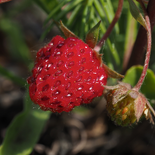
Virginia Strawberry(Fragaria virginiana)
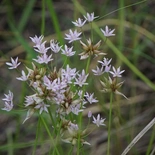
Meadow Garlic(Allium canadense)
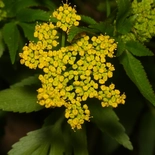
Golden Zizia(Zizia aurea)
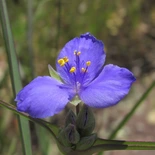
Spiderwort(Tradescantia spp.)
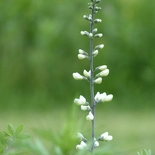
Wild Indigo(Baptisia spp.)
With RELIX and Matthews and Zinnen’s research, the goal is to provide knowledge about Midwestern plant species and their ecology. Understanding the components of the historic remnant ecosystem guides informed restoration practices and more diverse seed mixes sold by vendors.
Illinois plant ecologists fight to restore Midwest biodiversity-EurekaAlert.org
New Jersey: Adding Beauty to Your Commute
Thanks to the Montclair Garden Club, a traffic circle is now a beautiful native garden.
After the fountain that was originally in the traffic circle was removed, the 40-foot wide space was a neglected eyesore, made worse by construction vehicles from a nearby project, which left the area even more degraded and delayed improvements. Garden Club members met with the city last December to ask to revive the traffic circle and came up with a plan that featured native perennials and grasses. The work began June 13 with weed bed rototilling and spreading new soil. Once ready, 236 native plants were planted by Garden Club members and the community.
The existing water pipe in the traffic circle, which powered the old fountain, will now be used for drip irrigation, which will soon be installed. The Garden Club will continue to maintain the garden once it’s complete.
Garden Club Transforms Neglected Traffic Circle into Vibrant Native Garden-MontclairLocal.news
Rapidly Spreading Invasive Species Causes Widespread Irritation
Wild parsnip (Pastinaca sativa), a non-native invasive species, is spreading across Canada and the United States and is cause for concern. The sap of this plant can cause severe skin rashes when exposed to sunlight. “If you got boiling water poured on your skin, it would have a similar appearance to that,” said Chase Guindon, the Prince Edward Island Invasive Species Council’s coordinator.
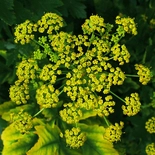
Wild Parsnip(Pastinaca sativa)
In the same family as golden Alexander (Zizia aurea), a native species, wild parsnip also has small, yellow flower umbrels. That’s where the similarities end. Golden Alexander is safe to touch. Wild parsnip is taller than golden Alexander with flat-topped flowers, pinnately compound, oblong leaves with serrated edges, and bright green, grooved, bristly stems. Wild parsnip is taller and blooms later in the season than golden Alexander.
Wild parsnip flourishes in disturbed environments like roadsides and is a threat to the local ecology, displacing native plants and insects. It also impacts agriculture, harming the livestock that eat it. To remove wild parsnip, wear personal protective equipment to pull and bag the plant and leave it in the sun to bake for at least a week, then take it to the landfill. Do not burn it: it can create dangerous fumes. For large infestations, herbicide may be needed.
Wild parsnip outbreak grows in P.E.I., warnings issued across Canada-CTVNews.ca
New Hampshire: Mountain Flora Facing Climate Change
Snow banks help protect rare alpine plants from some effects of climate change, according to a recent study from the Appalachian Mountain Club. Unfortunately, as the climate warms, the duration of snow cover could shrink and impact the plant communities it’s currently protecting.
Alpine plants on Mount Washington remain under snow until summer time which protects them from harsh, mountain conditions and provides soil moisture and nutrients as the snow melts. These alpine plants allow for pollinators to exist in the alpine zone and are important to biodiversity. Snow lasted in parts of the Presidential Mountains until August during the mid-1900s. Now, snow lasts until around June and returns in October, and researchers anticipate snowpack will continue to decrease. This also opens up the threat of invasive species invading in these spots as well.
The study investigated different ways to protect the plant communities on Mount Washington as they anticipate decreasing snow cover. This included monitoring the plants, adding fences to keep snow piled up, removing invasive species, and collecting seeds from the threatened species to preserve, grow and replant them. The study’s authors hope their findings will prove useful for other regions with snowy alpine plants such as in the Alps or the Rocky Mountains.