
This reading list is an invitation to slow down, pay attention, and reconsider what progress looks like through the lens of Robin Wall Kimmerer’s writing. Grounded in Indigenous knowledge, ecology, and reciprocity, these books explore our relationship with the natural world and offer practical insight for conservation, education, and everyday stewardship.
Across her body of work, Robin Wall Kimmerer offers a simple idea: that the living world is not a backdrop for human life, but a community we belong to. Plants are teachers. Landscapes hold memory. Care is not abstract; it is practiced. These books have shaped how many of us think about conservation, stewardship, and what it means to restore balance in place.
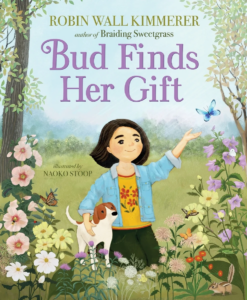
Bud Finds Her Gift
Written for children, this story follows Bud as she discovers her unique gifts through curiosity and connection with nature. The book emphasizes belonging, observation, and the idea that everyone has something meaningful to contribute.
You will take away an age-appropriate way to introduce ecological awareness; a gentle message about finding purpose through a relationship with nature. Check out this “Share Your Gift” activity sheet from Harperkids.com.
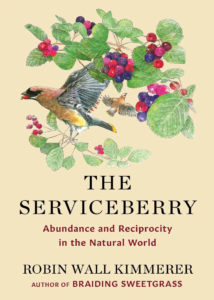
The Serviceberry: Abundance and Reciprocity in the Natural World
Using the serviceberry as a guide, this book explores alternatives to scarcity-driven economic thinking. Kimmerer connects ecology, gift economies, and community care to challenge extractive models that dominate both environmental and social systems.
You will take away new ways to think about abundance, sharing, and value; practical reflections on how ecological principles can shape daily choices; and inspiration for community-centered approaches to sustainability.
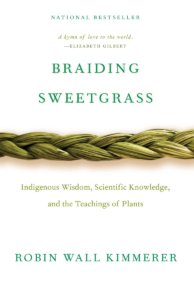
Braiding Sweetgrass
This book weaves Indigenous knowledge, ecological science, and personal storytelling into a relational view of the natural world. Rather than separating data from values, Robin Wall Kimmerer shows how science deepens when paired with gratitude, responsibility, and care for place.
You will take away a framework for thinking about ecology as relationship rather than resource; language for connecting science, ethics, and stewardship; and a deeper understanding of reciprocity as a practical conservation ethic. See our book review of Braiding Sweet Grass from the Wild Ones Journal.
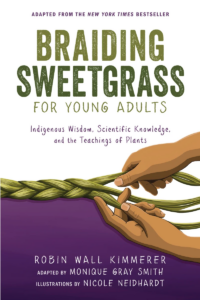
Braiding Sweetgrass for Young Adults
Adapted from the original, this edition makes Kimmerer’s ideas more accessible to teens and educators without diluting their depth. It is especially well suited for classrooms, youth programs, and intergenerational learning.
You will take away discussion-ready stories that introduce Indigenous knowledge and ecological thinking; approachable examples of stewardship and responsibility; and a strong foundation for youth-led conversations about caring for the land. See our book review of Braiding Sweet Grass for Young Adults from the Wild Ones Journal.
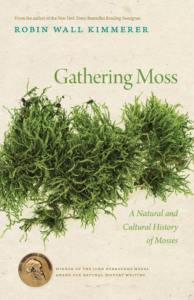
Gathering Moss
This collection of essays invites readers into the small, often overlooked world of mosses. Through close observation, Kimmerer models how slowing down sharpens scientific insight and deepens respect for the living world.
You will take away tools for practicing attention in the field; renewed appreciation for small-scale ecosystems; and insight into how humility and curiosity strengthen both science and stewardship.
Taken together, these works offer more than inspiration. They offer a framework for action rooted in respect for place and people. At a time when environmental challenges can feel overwhelming, Kimmerer reminds us that care begins locally and relationally. Gardens matter. Stories matter. How we treat the land reflects how we treat one another.
Further Reading & Resources
- Browse our full Wild Ones Reading List
- Watch Wild Ones National Webinar, Intergenerational Care for Land and Community: A Conversation with Robin Wall Kimmerer & Esther Bonney
- Learn more about Plant Baby Plant founded by Kimmerer