
At Wild Ones, we’re dedicated to connecting people and native plants. Our Native Plant News blog delivers the latest stories on native plant conservation, scientific discoveries, and habitat restoration from across the nation. This monthly, volunteer-written feature is designed to educate, engage, and inspire action, empowering readers to support biodiversity and promote sustainable landscaping with native flora.
The Invasive Plant That Harms Monarch Butterflies
Black swallow-wort (Vincetoxicum nigrum), a non-native invasive plant originally from Europe, not only threatens plant communities around it but also poses a threat to the monarch butterfly.
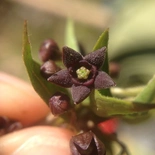
Black Swallow-Wort(Cynanchum louiseae)
Like many invasive species, black swallow-wort (or dog strangling vine) creates a monoculture where it invades. This happens in three ways: as a vine, it wraps around other plants and structures nearby and forms thickets and crowds out plants. Black swallow-wort is also allelopathic, creating a chemical compound that inhibits other plant growth around it. Finally, using wind dispersal to spread its seeds, black swallow-wort is able to spread long distances, and large thickets of this species can produce 2,000 seeds per square meter.
A member of the milkweed family, black swallow-wort attracts adult monarch butterflies, which then lay eggs on the plant. However, the plant is toxic to monarch larvae, and the caterpillars will not survive on the plant.
Black swallow-wort vine can be identified by oval-shaped leaves that are 3-4 inches long and 2-3 inches wide with pointed tips, and occur in pairs on the stem. The flowers have five petals and are dark purple to black with white hairs and form clusters. The plant forms milkweed-like pods where the seeds develop. This plant can also spread through rhizomes. To remove this plant, it can be done manually by removing the plant, including the roots. Plants with seeds should be burned or bagged. Chemical control, such as triclopyr ester and glyphosate, is effective against this plant.
Oklahoma: Grant Supports Native Habitat Installation
Thanks to a new grant from the Kirkpatrick Foundation, and executed through the Oklahoma Association of Conservation Districts and the Oklahoma Monarch Society, almost 762,000 square feet of wildlife habitat has been established in parks, yards, farms, and other green spaces.
Participants were reimbursed up to $525 per 100 square feet of native habitat that was planted, and one requirement was avoiding the use of pesticides, herbicides, and fungicides. Already, more wildlife visitors such as hummingbirds, amphibians, and butterflies have been reported in these new installations.
“Native plants are also drought-tolerant, making them ideal for regions with limited rainfall,” a representative of the Oklahoma Monarch Society said. “Gardening with natives means working with nature—not against it—and helps preserve shrinking habitats, support biodiversity, and protect important migrations like that of the Monarch butterfly.”
Native plant grant transforms Oklahoma yards into wildlife habitats-KOSU.org
Missouri: Invasive Plant Bill Signed
Last month, Missouri Governor Kehoe signed Senate Bill 105 into law, which now bans the sale of six invasive species. The species banned under this law are sericea lespedeza (Lespedeza cuneata), burning bush (‘Compactus’; Euonymus alatus), Callery pear (Pyrus calleryana), Japanese honeysuckle (Lonicera japonica), perilla mint (Perilla frutescens), and wintercreeper (variety Coloratus; Euonymus fortunei). The law will be implemented on August 28, 2025, and the legislation allows 4 of the six plants to continue to be sold through January 1, 2027, and the remaining two species to be sold through January 1, 2029. This is to ease revenue loss from nurseries that currently sell these species.
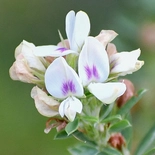
Sericea Lespedeza(Lespedeza cuneata)
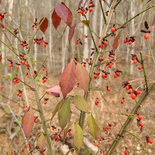
Burningbush(Euonymus alatus)
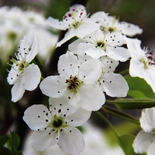
Callery Pear(Pyrus calleryana)
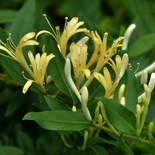
Japanese Honeysuckle(Lonicera japonica)
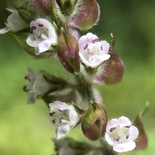
Beefsteakplant(Perilla frutescens)
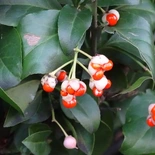
Winter Creeper(Euonymus fortunei)
The Missouri Invasive Plant Council (MoIPC) proposed the idea of banning the sale of certain invasive plants to prevent the detrimental effects these species have on Missouri ecosystems. Carol Davit, the MoIP chair, said, “The Missouri Invasive Plant Council is extremely pleased with this wonderful news and thanks Governor Kehoe and Missouri legislators for their support of this bill that will help protect Missouri’s working lands and native habitats.”
Governor Kehoe Signs Missouri Invasive Plant Bill into Law-MoInvasives.org
Another plant species recovered
Only 25 populations of Virginia sneezeweed (Helenium virginicum) were found in Virginia, and the plant was listed as a threatened species in 1998. Habitat changes due to drought and flooding threatened remaining populations of Virginia sneezeweed. Now, there are more than 55 known populations in Missouri — even more than in Virginia. Because of this, the United States Fish and Wildlife Service is proposing to delist Virginia sneezeweed from the list of Endangered and Threatened Plants due to successful recovery efforts.
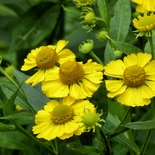
Virginia Sneezeweed(Helenium virginicum)
While the threats to Virginia sneezeweed habitat remain, this species has increased in number and range due in large part to seed banking, propagation, and partner-led conservation efforts.
New Hampshire: Rare Plant Community at Risk
The rare silverling (Paronychia argyrocoma) and hudsonia (Hudsonia spp.) plants are found along the Saco River and help support the biodiversity and ecological relationships between animals, fungi and other wildlife found there. Historical records from 30-40 years ago documented 11 sites; now there are only four.
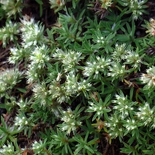
Silvery Nailwort(Paronychia argyrocoma)
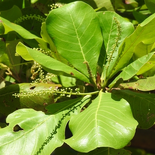
Goldenheather(Hudsonia spp.)
According to Bill Nichols, a New Hampshire state botanist, the likely culprit of the decline of these plants and the communities they form is climate change. In the past few decades, rain and flooding have become more frequent and more extreme. While these communities require flooding and precipitation to remove wood vegetation, move sediment, and discourage competition, the disturbance that these increased flooding events are causing is harming these plants. “That increased flood intensity just completely, direct on nailed it and washed away both the sediments it relies on and the species,” Nichols said.
Botanists Nichols and Amy Lamb plan to look into other factors, such as development or recreation, for the plants’ decline. Having originally thought these plants were lost, they are hopeful of preserving what is left. “Things have intrinsic value, and it’s our obligation to protect things just because they are what they are. And once it’s gone, it’s gone,” said Nichols.
With climate change, this rare plant community along the Saco River is barely holding on-NHPR.org
Clean-Up Crew
Native plants play a crucial role in improving water quality by absorbing pollutants through their roots (called phytoremediation). Researchers at Olds College in Alberta are putting this to the test by creating floating islands of native plants to test if native plants can remove contaminants from feedlot run-off ponds. A patented technology by Tannas Conservation Services, these islands are four feet by eight feet. Plants are added to the islands, and the roots extend into the water body.
Seven different plants were tried, all native to the region. This experiment was done in three phases. During phase one, the floating islands were in a greenhouse in tubs of water spiked with different nutrients, and researchers measured what the plants absorbed and how they reacted. Phase two involved adding feedlot pond water into the greenhouse tubs; researchers found that the plants absorbed phosphorus and potassium from the feedlot water. The plant islands were then moved into the feedlot ponds during phase three.
The preliminary results were that the plants removed 69% more ammonia, 55% more phosphorus, and 27% more nitrogen, 93% more copper, 81% more aluminum, and 77% more zinc than the control pond. The native plants also reduced chemical runoff and blue-green algae. Finally, the presence of these native plant islands decreased excessive growth of plants and algae (eutrophication). The most effective plants were Baltic rush (Juncus balticus), water sedge (Carex aquatilis), and wheat sedge (Carex atherodes).
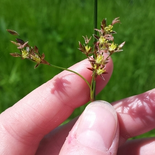
Mountain Rush(Juncus arcticus ssp. littoralis)
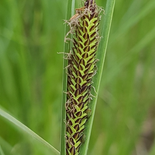
Water Sedge(Carex aquatilis)
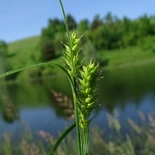
Wheat Sedge(Carex atherodes)
Urbanization Disrupts Seed Dispersal
Native seed dispersal is a necessary process that allows plants to persist, spread, and establish new populations. Urban areas may impact native plant seed dispersal, especially those that rely on animals to spread the seeds. In a study published in the journal Conservation Biology, researchers investigated seed dispersal in urban areas and in forests on Tenerife Island to study the effects of urbanization on seed dispersal.
Study authors found 150 interactions between 83 plant and 18 animal species in the forest and 89 interactions between 41 plant and nine animal species in urban areas, and determined that urban areas supported half the species of fruit plants and fruit-eating animals compared to the forest. Non-native plants found in urban areas were used by native fruit-eating generalist species and potentially assisted in the spread of these non-native species from urban environments to forests. Six of the fruit-eating species avoided urban areas, potentially preventing seed dispersal across urban landscapes.
These results show the importance of using native plants and removing non-native species in urban environments to restore habitat connectivity between urban areas and forests and assist in successful seed dispersal.
Mendes, S. B., Olesen, J. M., Nogales, M., Marrero, P., Romero, J., Nieves, C., & Heleno, R. (2025). Urbanization of seed dispersal networks. Conservation Biology, e70097. https://doi.org/10.1111/cobi.70097